What to Do in Cortona in One Day — A Local’s Complete Guide
One day in Cortona is not enough. I want to say that clearly before giving you an itinerary for one day, because the honest version of this guide begins with an acknowledgment that the town rewards more time than most visitors give it.
That said — one day, done properly, is enough to understand why people come back. It is enough to feel the specific quality of this place. It is enough to make the decision to return.
Here is how to spend it.
7:00am — The Etruscan Walls at Sunrise
Start before the town wakes up. The upper part of Cortona — the area near the Fortezza Medicea at the very top of the hill — is accessible before any cafe or museum opens, and it is at its best in the hour after sunrise when the light comes in low from the east and the Val di Chiana below is still partially covered in morning mist.
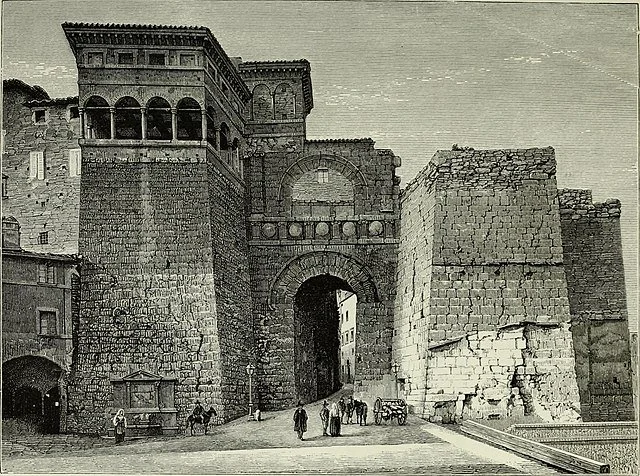
The Etruscan walls that run along the upper ridge of the town were built approximately 2,700 years ago — before Rome existed. You can put your hands on them. No ticket, no queue, no barrier between you and nearly three millennia of history. At this hour, you will almost certainly be alone.
Walk the full surviving circuit of the walls. It takes approximately forty-five minutes at a comfortable pace. The views over the valley become progressively more extraordinary as you move around the ridge — Lake Trasimeno visible to the south, Umbria beyond it on clear days, the cypress-lined roads of the Val di Chiana below.
This is the best hour of the day in Cortona. Do not miss it by sleeping in.
8:30am — Espresso at the Bar
Come down from the walls and find a bar. Any bar on or near Piazza della Repubblica will do, but go to the one where the locals are standing at the counter rather than the one with the most prominent tourist menu in the window.
Order an espresso. Stand at the counter. Drink it in two sips. Pay at the counter. Say buongiorno.
This takes seven minutes. It is not optional. The espresso bar is the social infrastructure of the Italian morning — the place where the community calibrates itself at the start of the day — and participating in it, even briefly and imperfectly, gives you access to something that sitting at a table with a cappuccino and a phone never will.
9:00am — The Upper Neighborhoods
Most visitors to Cortona walk Via Nazionale — the main commercial street — and consider themselves to have seen the town. Via Nazionale is pleasant. It is not the town.
Above Via Nazionale, the medieval streets continue upward through neighborhoods that almost no tourists ever reach. The streets narrow to the width of two people passing carefully. The buildings lean together overhead. There are small piazzas that have no cafes and no tourist infrastructure — they exist because medieval urban planning required open spaces, not because anyone designed them for your enjoyment.
Walk uphill from Via Nazionale and keep going past the point where the obvious path ends. Get slightly lost. The town is small enough that you cannot get seriously lost, and the getting lost is frequently where the best things are.
Look for the external staircases — stone steps rising from street level to unmarked doorways on upper floors, the stone worn concave by centuries of feet. Look for the fountain that still runs with cold spring water in the highest residential section of the town. Look for the cats, who have been conducting their affairs in these streets since long before tourism existed and will continue to do so long after.
Allow ninety minutes for this. You will not regret a minute of it.
10:30am — The MAEC Museum
The Museo dell’Accademia Etrusca e della Città di Cortona is one of the finest small museums in Italy and one of the least crowded significant museums in the country.
The Etruscan collection is extraordinary. The famous Etruscan chandelier — a large bronze lamp from the 5th century BC — is one of the masterpieces of Etruscan metalwork. The funerary urns, the jewelry, the household objects recovered from the tombs below the town give the walls you walked at dawn a human context that makes them suddenly more comprehensible and more moving.
Allow two hours. You will not be rushed. You will probably have rooms to yourself.
The museum also covers Cortona’s Roman, medieval, and Renaissance history — providing a continuous narrative of a city that has been inhabited without interruption for nearly three thousand years. By the time you leave, you will understand what you are walking through in a way that changes how the rest of the day feels.
12:30pm — Lunch
Do not eat on the main piazza. The restaurants on Piazza della Repubblica and the immediate vicinity exist primarily for tourists — not bad, but not the point.
Walk slightly off the main streets and look for a trattoria where the menu is handwritten, where the daily specials depend on what arrived that morning, and where you are the only person asking if they have an English menu. They do not. This is correct.
Order pici — the thick hand-rolled pasta of southern Tuscany — with whatever sauce the kitchen is making today. Order the local wine. Take two hours. This is not inefficient. This is the architecture of the Tuscan day, and participating in it is part of what you came for.
2:30pm — Le Celle
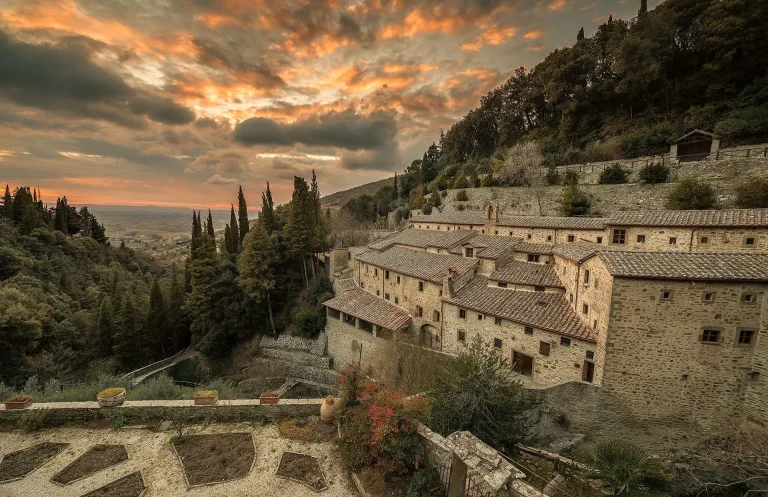
Drive ten minutes from the center of Cortona to Le Celle — the Franciscan hermitage carved into a cliff above a mountain stream where Francis of Assisi came to pray before Assisi became famous.
This is one of the most significant Franciscan sacred sites in the world. Monks still live there today. The cave where Francis prayed is still there. The silence is the kind that only places of long and genuine devotion produce.
Most visitors to Cortona never go. Most visitors to Assisi never know it exists.
Park at the bottom and walk up the path alongside the stream. Dress modestly — covered shoulders and knees. Leave your phone in your pocket. Sit by the stream for as long as the afternoon allows.
This is the hidden hour of a day in Cortona. The hour that most itineraries miss and that most people who experience it remember longest.
4:30pm — The Tumulo del Sodo
On your way back from Le Celle, stop at the Tumulo del Sodo — the great Etruscan burial mound just below the hill of Cortona.
A circular earthwork covering multiple burial chambers, with a monumental external altar and carved stone staircase only excavated in the 1990s after two thousand years underground — this is one of the most significant Etruscan archaeological sites in Italy and one of the least visited.
On most days you can visit it almost alone. Allow forty-five minutes. The physical encounter with a burial monument this size, this old, and this complete produces a specific effect that is worth experiencing.
6:00pm — Return to Town, Aperitivo
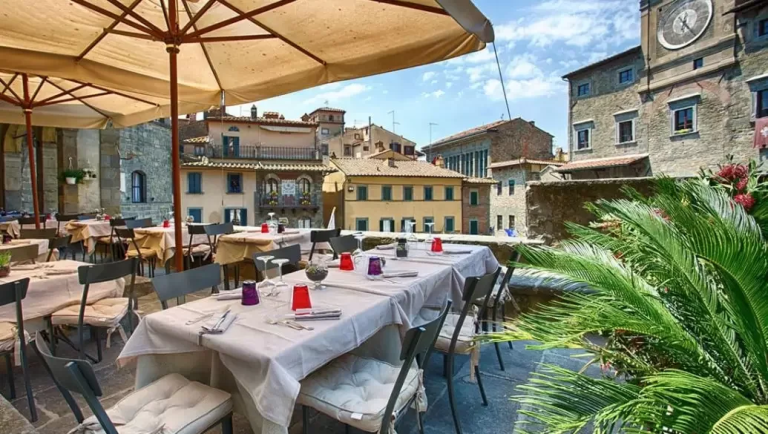
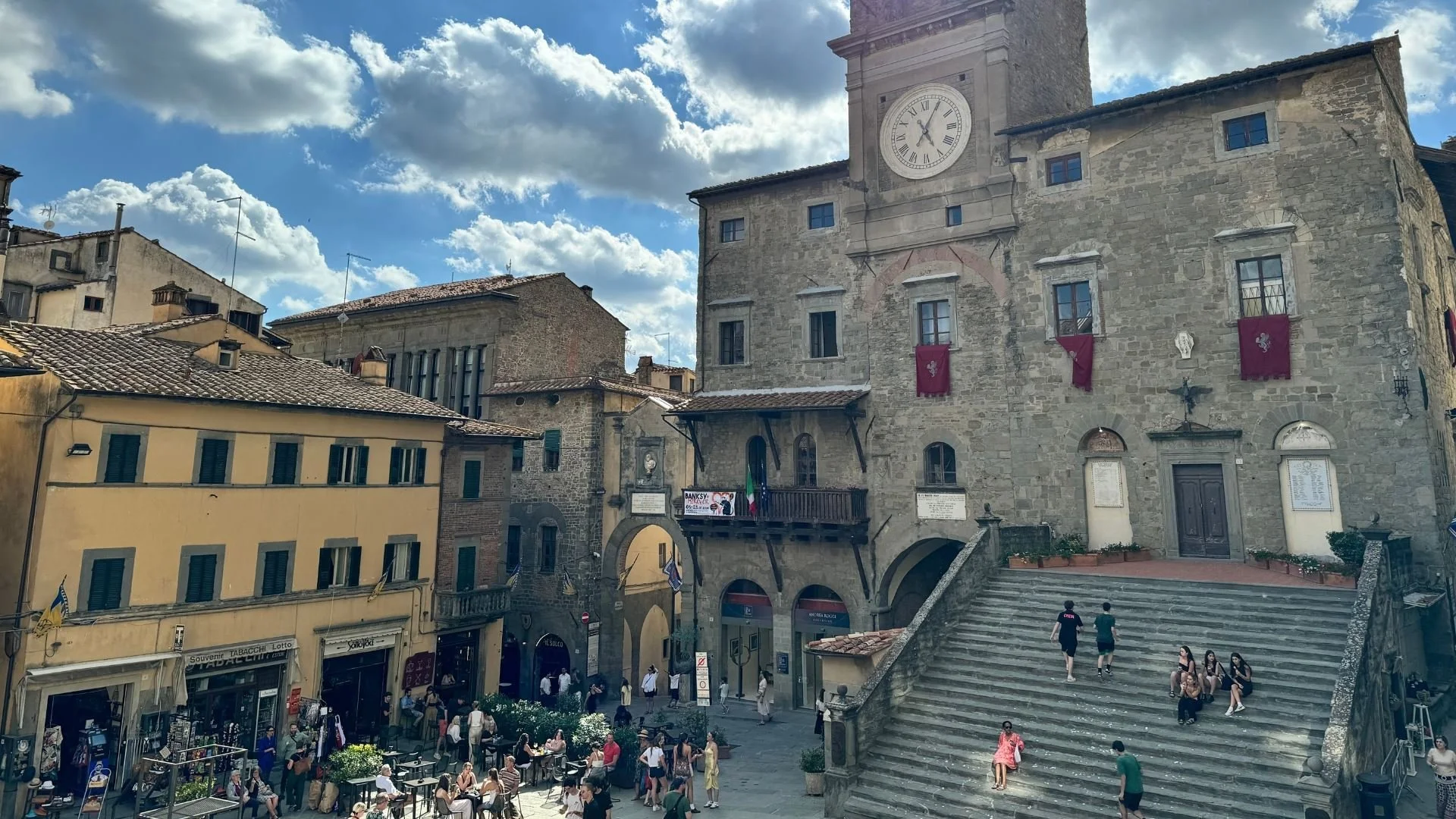
Come back to Cortona for the early evening. Find a bar with outdoor seating — anywhere on or near Piazza della Repubblica with a view of the square — and order an Aperol Spritz or a local wine.
The light at this hour in Cortona, particularly in the warmer months, is the light that painters have been trying to capture in this landscape for centuries. It comes in low and golden from the west, it catches the stone of the buildings, it turns the Val di Chiana below into something that looks deliberately composed.
Sit in it for an hour. Do nothing except be where you are.
7:00pm — The Passeggiata
At approximately 7pm, stay where you are and watch what happens.
The town comes outside. Not for a specific reason — just to walk, slowly, through the shared spaces, to see and be seen, to exchange the small conversations that hold a community together. This has been happening in Cortona every evening for centuries and it will continue to happen long after every tourist who witnessed it today has gone home.
Watch it without your phone. Give it twenty minutes of genuine attention. You will understand something about Italian longevity and community that no article has ever managed to explain adequately.
8:30pm — Dinner
Eat late. This is Italy. Restaurants that open at 7:30pm are for tourists. The kitchens come alive at 8:30 and the locals arrive at 9.
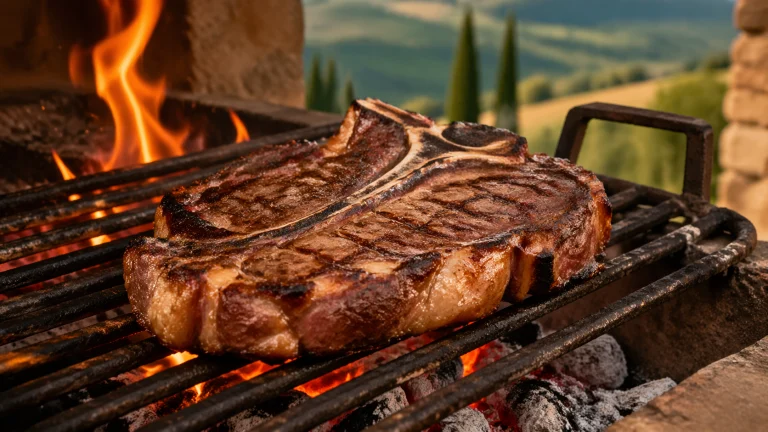
Order whatever the kitchen recommends. Order the bistecca alla Fiorentina from Chianina cattle if it is on the menu — the cattle were raised in the valley you have been looking at all day. Order the local wine. Take as long as the evening allows.
This is how a day in Cortona ends. Not with a check-out time or a morning flight anxiety. With a table, a glass, and a town that has been doing this for three thousand years and has worked out, over that time, that this is the right way to end a day.
Experience Cortona with MyTuscanDays
The difference between following an itinerary and understanding what you are looking at is the difference between a day in Cortona and a day in Cortona with someone who lives here.
MyTuscanDays offers private day experiences in Cortona — the Etruscan walls, the upper neighborhoods, Le Celle, the Tumulo del Sodo, lunch where the locals eat, and the passeggiata at the right hour — guided by Arpi, a craftsman and local insider who has been living and building in this town since 2023.
Every experience is private, personal, and built around your pace.
📍 Cortona, Tuscany, Italy 👉 Explore Experiences 👉 Reserve Your Day 📩 [email protected]
What to Do in Cortona in One Day: The Short Answer
If you take away only one thing about what to do in Cortona in one day, take this: start early, walk uphill, eat lunch slowly, and stay for the evening. The town does not reward rushing, and the best hours are the ones most visitors miss.