The Road Between Cortona and Montepulciano
There are roads in Tuscany that exist in travel photography and roads that exist in real life. Most of the famous ones — the cypress-lined avenue at San Quirico d’Orcia, the Gladiator road in Val d’Orcia — are both. They are genuinely beautiful and they are genuinely crowded, particularly in the hours when the light is best and every photographer in a hundred-kilometer radius has the same idea.
The road between Cortona and Montepulciano is neither famous nor crowded. It does not appear in travel magazines. It is not the subject of painting workshops or photography retreats. It is simply a road that runs through one of the most quietly beautiful sections of southern Tuscany, connecting two extraordinary hilltop towns across a valley that has been farmed continuously for millennia.
I drive it regularly. It never gets old.
The Route
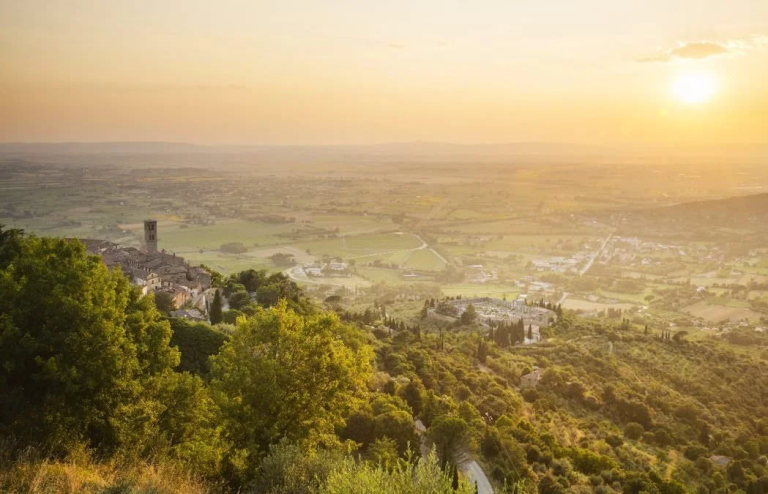
From Cortona, the road descends steeply from the hilltop town to the flat agricultural floor of the Val di Chiana — the broad valley that runs north-south through this part of Tuscany, stretching from Arezzo in the north toward the border with Umbria and Lazio in the south.
The valley floor is flat and geometric in a landscape that is otherwise all curves and elevation changes. This flatness has agricultural roots — the Val di Chiana was a marshy, malarial swamp until Florentine and later Papal engineers drained it systematically between the 16th and 18th centuries, one of the great land reclamation projects of pre-industrial Europe. What they created is the productive agricultural plain visible today: fields of grain, sunflowers, and the occasional vineyard laid out in the regular pattern that engineered landscapes produce.
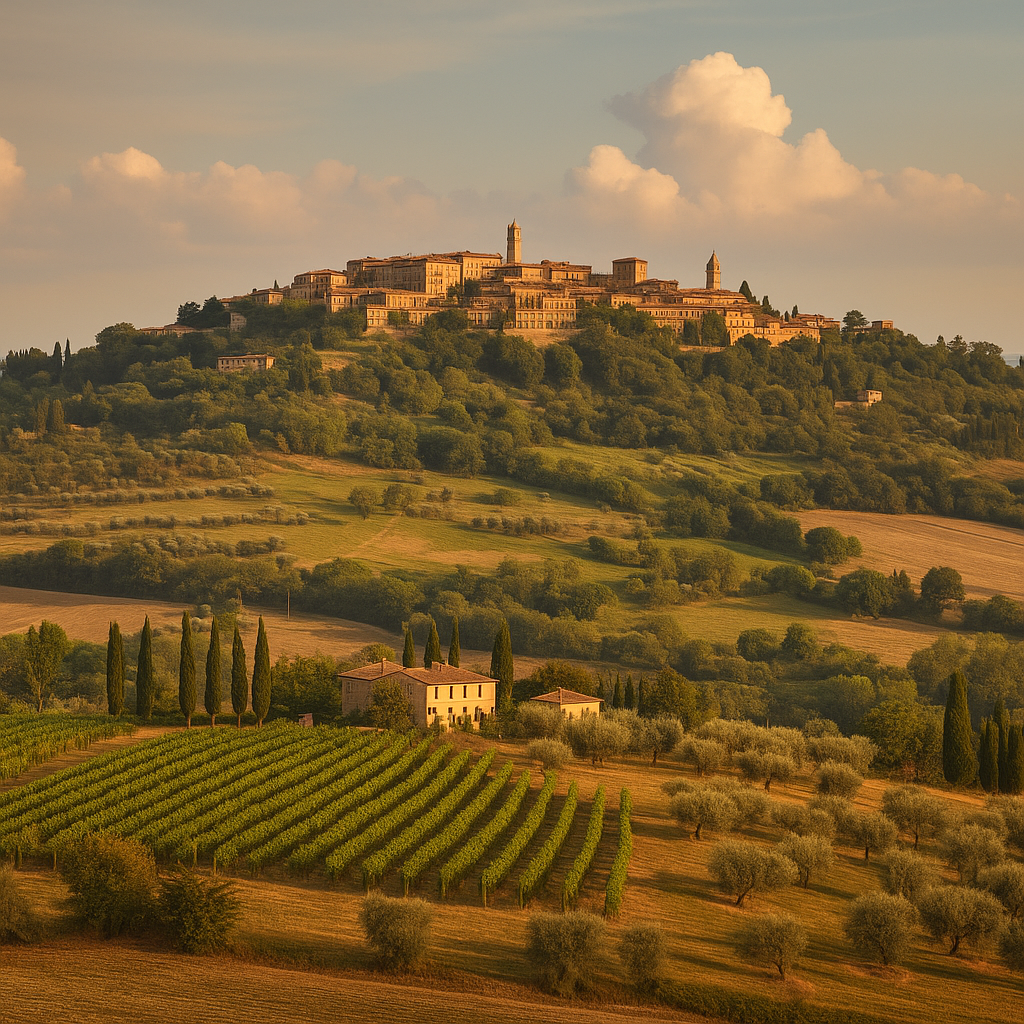
Crossing the valley floor, the road begins to climb again as it enters the hills of southern Tuscany. The character of the landscape shifts immediately — the flat geometry of the reclaimed valley gives way to the rolling, undulating terrain that defines this part of Tuscany. The hills are covered with olive groves and vineyards. The farmhouses become more isolated, more dramatically positioned, more obviously ancient.
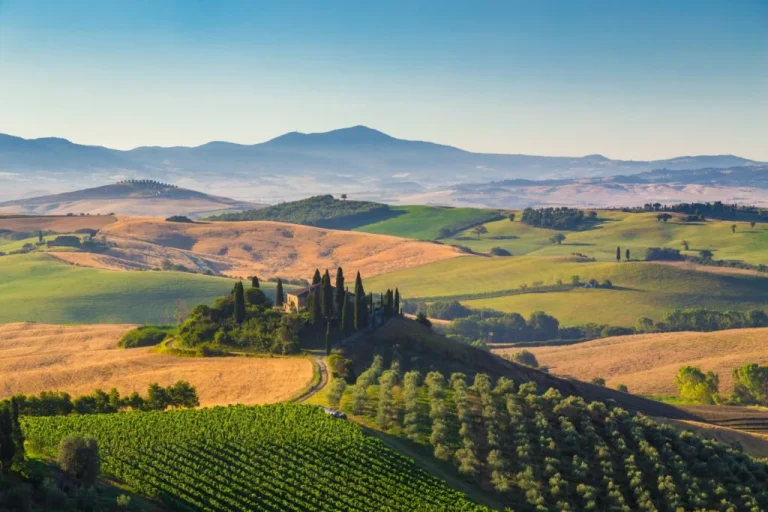
The cypress trees begin here. Not the occasional specimen but the systematic lines — ridgeline plantings that follow the crests of the hills and the curves of the roads, placed there by farmers over centuries as windbreaks and property markers. From certain angles, at certain times of day, the cypresses reduce the landscape to its essential elements: the curve of a hill, the vertical accent of a tree line, the color of the sky.
Montepulciano appears on the horizon as you approach — its tower and the mass of its buildings visible from several kilometers away, sitting on its ridge above the surrounding hills exactly as it has sat for a thousand years.
Why This Road Specifically
There are faster ways to drive between Cortona and Montepulciano. The SS71 and the A1 autostrada combination gets you there in thirty-five minutes. The route I am describing takes between fifty minutes and considerably longer, depending on how many times you stop.
The stopping is the point.
This road rewards attention in a way that fast roads cannot. The views change with every kilometer — not dramatically, not in the way of mountain roads with sudden revelations at each curve, but gradually and continuously, the way that rolling landscape changes when you move through it slowly enough to notice.
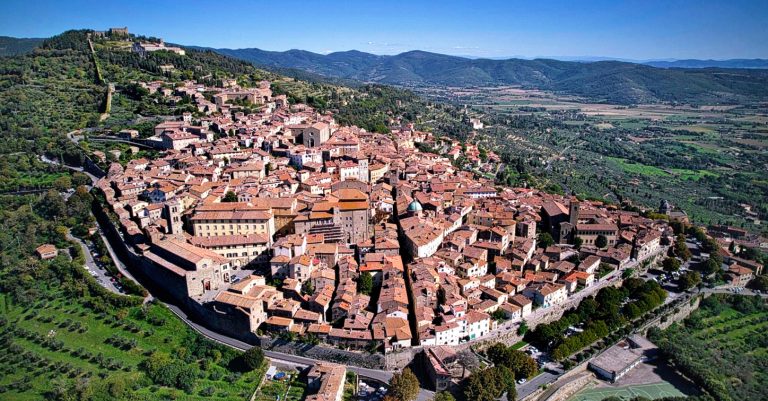
There are points along the route where pulling off the road and standing still for five minutes produces views that would be extraordinary anywhere else in the world and are simply part of the drive here. Lake Trasimeno visible to the south. The rooftops of Cortona diminishing behind you. The tower of Montepulciano appearing and disappearing as the road curves through the hills ahead.
There is a section of road — I will not give precise coordinates because precision removes the discovery — where the cypress trees on both sides create a canopy effect in late afternoon light that is unlike anything else I have encountered in Tuscany. The light comes through the trees in a specific way at a specific hour that lasts perhaps twenty minutes. If you happen to be on this road at that hour, you will understand immediately why people move to Tuscany and find it very difficult to explain to people who have not been here why exactly that was the right decision.
What to Stop For
The road is not simply transit between two destinations. There are specific reasons to stop along the way.
The valley viewpoints: At the point where the road begins its descent from Cortona into the Val di Chiana, there are several natural stopping points with clear views back toward the town on its hill and forward across the valley floor. These views give you the full geography of what you are driving through — the relationship between the hilltop towns and the agricultural valley that has sustained them for centuries.
The farm stands: Along the valley floor, particularly in autumn during and after the olive harvest, farm stands appear selling fresh olive oil, seasonal vegetables, and local products directly from the people who produced them. These are not tourist amenities — they are agricultural commerce, the farmers selling surplus directly rather than through the distribution system. Stop when you see them. The oil will be this season’s pressing. The price will be a fraction of what the same oil costs in a shop.
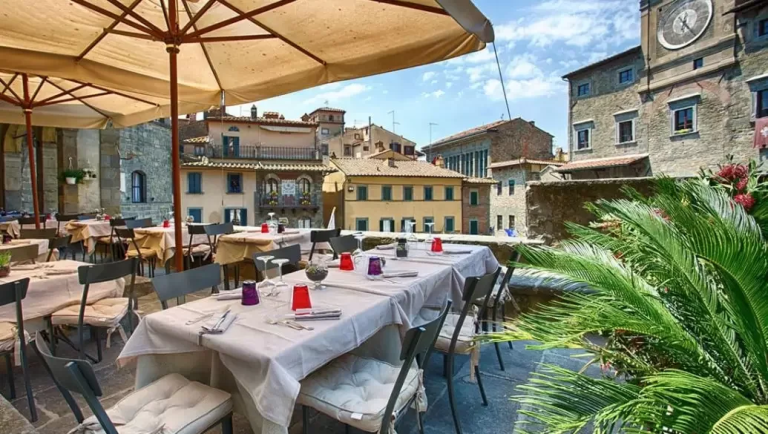
The hilltop villages: Between Cortona and Montepulciano, the road passes near several small villages that most drivers pass through without stopping. These villages have bars and small restaurants that serve the local population — not tourists, because tourists do not stop here. The food is honest, the prices reflect the actual cost of ingredients rather than the cost of location, and the experience of being the only non-Italian in a small village bar on a Tuesday afternoon is one that is increasingly difficult to replicate anywhere in Italy.
The vineyards: As the road enters the hills approaching Montepulciano, the vineyards of the Vino Nobile appellation begin. Some producers have small cantinas or tasting rooms visible from the road — unmarked or minimally marked in the way of places that are not primarily oriented toward passing trade. If you see one, stop. The tasting will be informal and the wine will be good.
The Best Time to Drive the Road Between Cortona and Montepulciano
The road is driveable year-round and beautiful in every season, but certain conditions produce the best experience.
Late afternoon in autumn: October and November, when the harvest is complete, the air is clear, and the low sun produces the most intense golden light on the hills. The vineyards are turning color. The olive harvest may be underway in the groves you pass. The air smells of wood fires from the farmhouses. This is the road at its best.
Early morning in spring: April and May, when the wildflowers are in the margins of the fields and the hills are the specific deep green that only the Mediterranean spring produces. The light is clear and cool. The tourist season has not yet arrived at the intensity of summer. The road is quiet.
Summer evenings: June, July, and August produce long, warm evenings where the drive back from Montepulciano at golden hour — departing around 7pm, arriving back in Cortona as the last light leaves the valley — is one of the great simple pleasures of living in this part of Italy.
Winter on clear days: December and January produce the clearest air of the year in Tuscany. The deciduous trees are bare, which opens views through the landscape that are closed in other seasons. Lake Trasimeno is visible with unusual clarity on cold, still days. The road is quiet in a way that it is not in the other seasons. If you can accept the cold and the shorter days, winter has its own arguments.
The Drive as Part of a Day
The road between Cortona and Montepulciano is most satisfying when it is part of a day rather than simply transit between destinations.
Leave Cortona mid-morning. Drive the back road slowly. Arrive in Montepulciano before noon. Spend the afternoon in the cantinas and at lunch. Drive back at golden hour.
This is a complete day — one that uses the road as an element of the experience rather than an inconvenience between points. The drive there builds anticipation. The drive back allows the afternoon to settle. The valley in the evening light is a fitting end to a day spent in one of the finest wine towns in Italy.
At MyTuscanDays, this is one of the day structures we use most consistently with guests — because it works, because it produces a day that is greater than the sum of its parts, and because the road itself is an experience worth having.
Drive It With MyTuscanDays
If you would rather experience this road from the passenger seat — with someone who knows where to stop, what to look for, and how the day should be structured around the drive — that is exactly what we offer.
Private day experiences from Cortona to Montepulciano and the surrounding southern Tuscany. No groups. No schedule that cannot change. Just the road, the wine, and the valley doing what it does.
📍 Cortona, Tuscany, Italy 👉 Explore Experiences 👉 Reserve Your Day 📩 [email protected]
Cortona to MontepulcianoTuscanyScenic Drive Val di ChianaCypress TreesMyTuscanDaysTuscany Road TripSouthern TuscanyHidden TuscanyCortona Day TripTuscany Countryside