The Tumulo del Sodo — Cortona’s Etruscan Necropolis
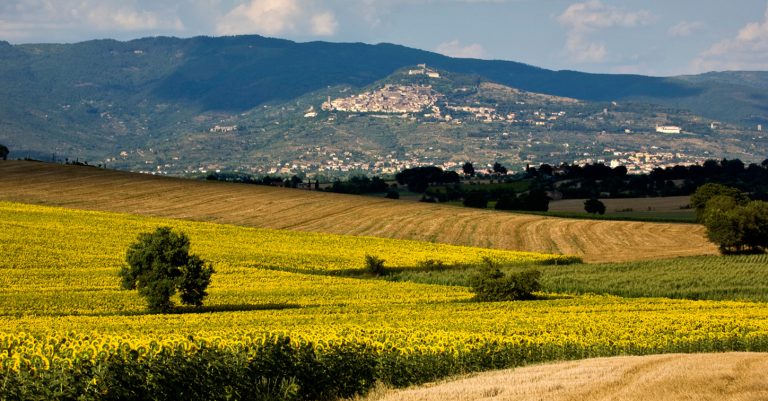
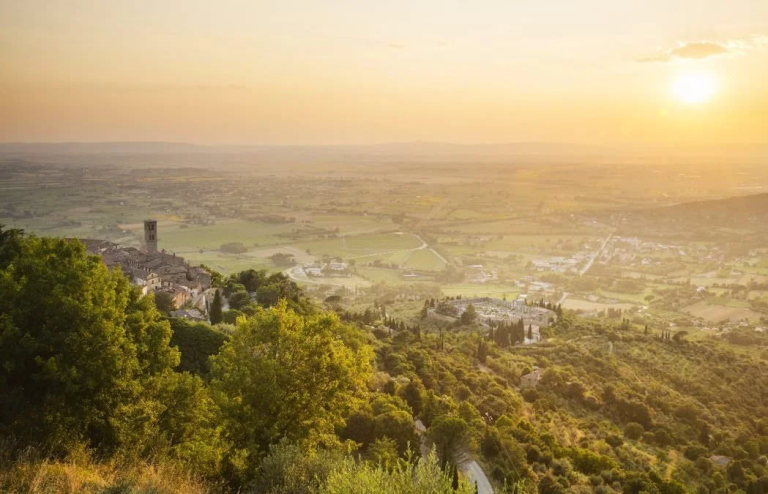
Most visitors to Cortona look up. They climb to the historic center, walk the Etruscan walls on the upper ridge, look out over the Val di Chiana from the height of the hill. The view is extraordinary. The history is visible in every direction.
What almost nobody does is look down.
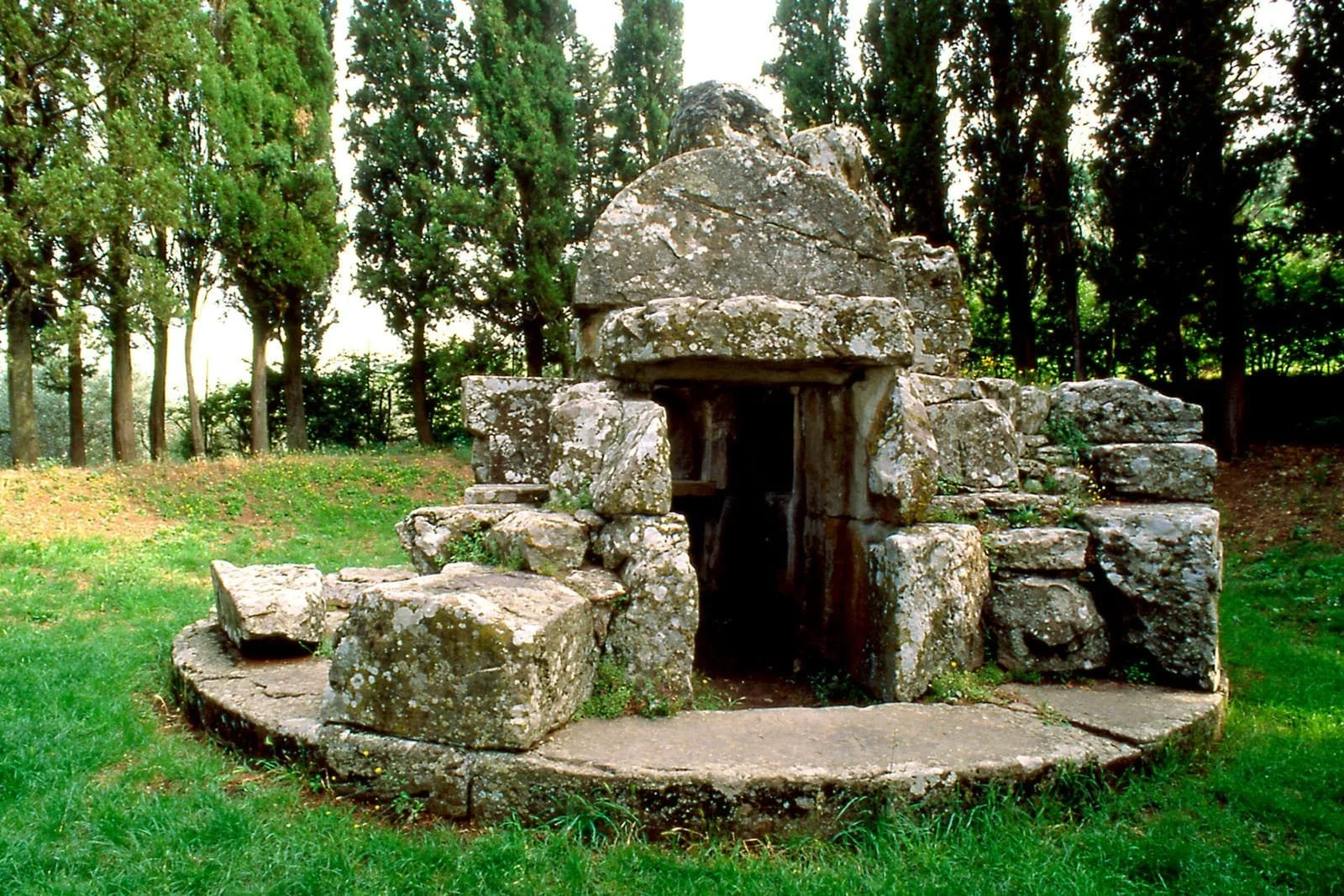
Just below the hill of Cortona, on the flat agricultural land of the Val di Chiana, sits one of the most significant Etruscan archaeological sites in central Italy. The Tumulo del Sodo — a massive circular burial mound containing multiple burial chambers, a monumental external altar, and carved stone that was only excavated in the 1990s after remaining hidden underground for over two thousand years — is visible from the road if you know what you are looking at.
Most people do not know what they are looking at. They drive past it on the way into or out of Cortona and see a grassy mound and a fenced archaeological area and continue on their way.
This is one of the more significant losses in Etruscan tourism. The Tumulo del Sodo deserves better.
What a Tumulus Is
A tumulus — plural tumuli — is a burial mound: a large circular earthwork constructed over one or more burial chambers. The Etruscans built tumuli across central Italy as the primary form of elite burial from approximately the 7th century BC onward. The largest tumuli could reach enormous dimensions — thirty meters or more in height, a hundred meters or more in diameter — and contained multiple burial chambers arranged around a central corridor, each chamber furnished with everything the deceased would need in the afterlife.
The Tumulo del Sodo is a large example — its diameter is significant and the earthwork that covers the burial complex is visible from a considerable distance once you know to look for it. The name — del Sodo — refers to the local area, not to any specific historical designation.
The Tumulo del Sodo Altar — A 1990s Discovery
The most remarkable feature of the Tumulo del Sodo is not the burial chambers — though they are significant — but the monumental altar on the exterior of the mound that was only discovered and excavated in the 1990s.
The altar is a large stone structure attached to the exterior face of the tumulus — a grand staircase descending from the top of the mound to a carved platform at ground level, flanked by sculptural elements including carved figures and architectural ornament that indicate a level of artistic sophistication and investment that commands respect.
This altar was used for ritual purposes — offerings, ceremonies, the ongoing religious obligations that the Etruscans maintained toward their dead long after the initial burial. The fact that it survived underground for over two thousand years and is now partially visible and accessible is one of the remarkable accidents of archaeological preservation.
The excavation that revealed it was conducted in the 1990s by the Cortona archaeological team and is considered one of the most significant Etruscan discoveries of the late 20th century. The scholarly literature on it continues to grow. The full interpretation of the altar’s iconographic program — what the carved figures represent, what ceremonies were conducted there, what this specific tumulus meant within the religious life of ancient Cortona — is still being developed.
The Burial Chambers
Within the tumulus, multiple burial chambers are accessible — vaulted rooms carved from the native rock and covered by the earthwork above them, connected by corridors and organized according to the conventions of Etruscan funerary architecture.
The chambers were furnished with everything the deceased would need — food, wine, personal objects, weapons if the deceased was a warrior, household items appropriate to their status. The quality and quantity of these objects reflected the wealth and importance of the person buried and the family that buried them. The Etruscans were not minimalists about death — they believed genuinely in the continuation of life beyond it and invested accordingly in the material equipment of that continuation.
The objects from the Tumulo del Sodo are now in the MAEC museum in the center of Cortona — the Etruscan collection that provides the material context for the physical sites outside the town. Visiting the museum before or after the tumulus gives the chambers a human reality that they cannot fully convey on their own.
What You Experience on the Ground
The Tumulo del Sodo is an active archaeological site — ongoing research and conservation work continues in and around it. The visitor experience is correspondingly variable: sometimes the interior chambers are accessible, sometimes they are not. The exterior of the mound and the altar area are generally accessible during opening hours.
What you experience at ground level is the physical scale of the Etruscan investment in their dead. The mound is large enough to be impressive as a landform — you walk around it rather than across it. The altar, even partially excavated and protected by a modern covering structure, conveys the monumentality of the original construction.
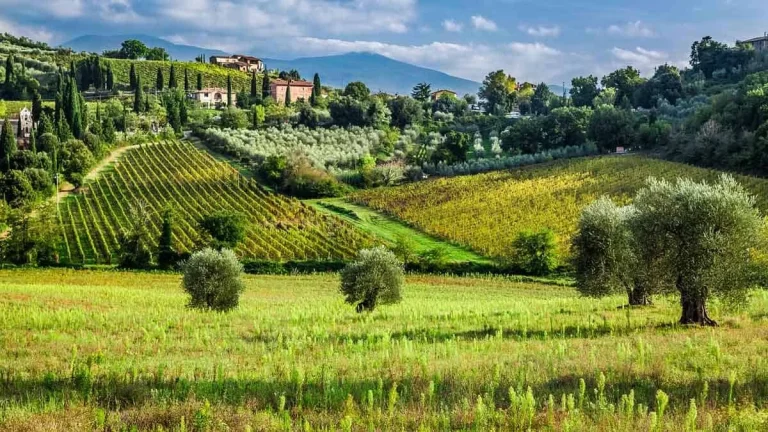
The surrounding landscape is important context. You are standing on the flat floor of the Val di Chiana — the agricultural valley that has sustained this region for millennia — looking up at the hill of Cortona rising steeply above you. The people who built this tumulus lived on that hill. They buried their dead here, on the valley floor, at the base of the hill, in sight of the city they inhabited.
The relationship between the living city above and the necropolis below is one of the consistent features of Etruscan urban planning — the city of the dead positioned in deliberate relationship to the city of the living. Standing between the two, you understand something about Etruscan cosmology that reading about it does not convey.
Practical Information
The Tumulo del Sodo is located approximately 1.5 kilometers from the center of Cortona — reachable on foot from the lower town or by car in a few minutes. It sits just off the road that runs around the base of the hill.
Opening hours vary seasonally and are subject to change based on ongoing archaeological work. Check locally before visiting — the tourist information office in Cortona can confirm current access.
An entrance fee applies. It is modest.
The visit takes between thirty minutes and one hour depending on what is accessible on the day and how much time you spend with the altar and the exterior of the mound.
Combine the visit with the MAEC museum in the center of town for the complete Etruscan Cortona experience — the museum provides the material culture context that makes the physical site fully comprehensible.
The Tumulo del Sodo with MyTuscanDays
The Etruscan sites around Cortona — the walls, the MAEC museum, the Tumulo del Sodo — are most rewarding when visited with the historical context that makes them something more than impressive ruins.
MyTuscanDays includes the Etruscan trail as a central element of Cortona day experiences — guided by Arpi, a local craftsman and insider who has spent years studying and walking this landscape and can provide the context that transforms a visit to an ancient site into something that stays with you.
📍 Cortona, Tuscany, Italy 👉 Explore Experiences 👉 Reserve Your Day 📩 [email protected]