Wine Tasting in Montepulciano — A Local’s Guide
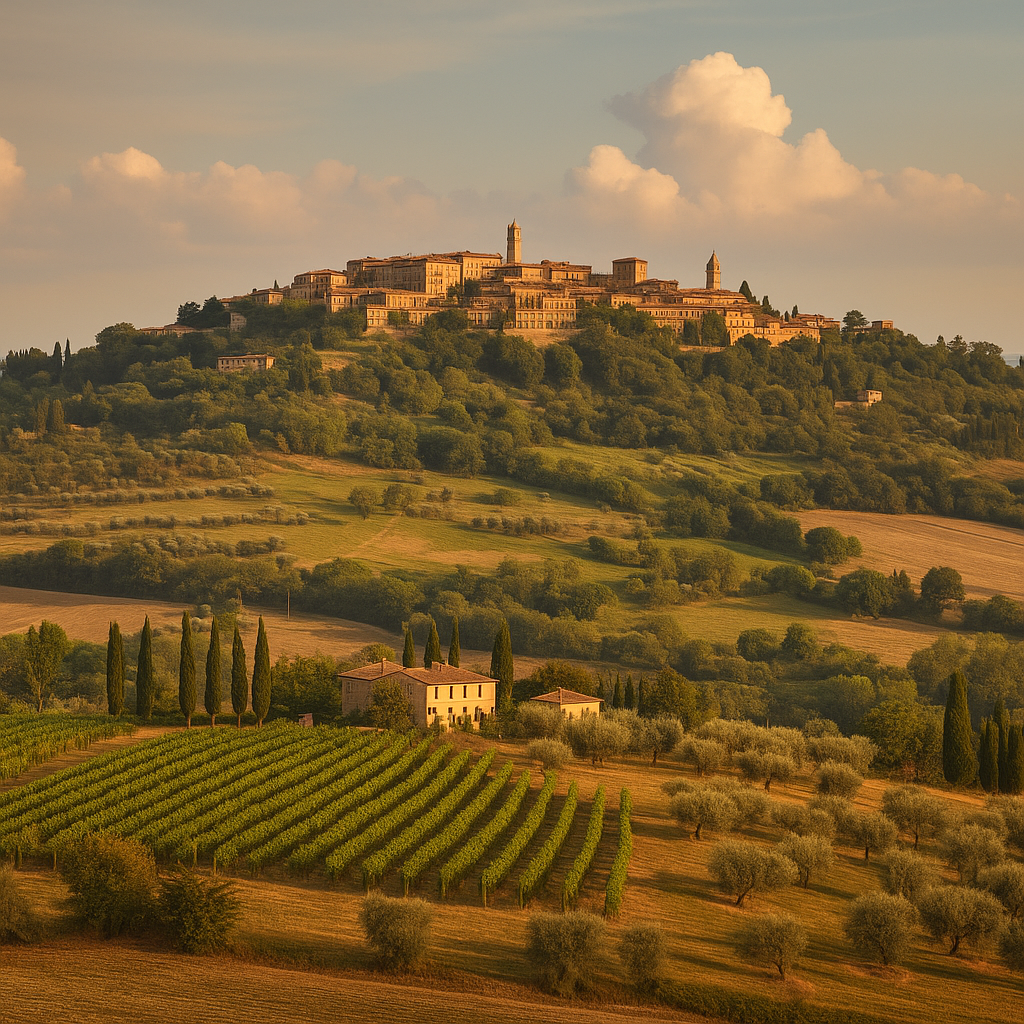
Montepulciano is one of the great wine towns of Italy. Not great in the way that Barolo is great — remote, specialized, requiring pilgrimage. Great in the way that a hilltop town can be when everything about it — the architecture, the people, the landscape, the thing it produces — has been organized around a single obsession for centuries.
The obsession is Vino Nobile di Montepulciano. And if you are within driving distance of this town and you do not go, you have made a mistake that is very easy to correct.
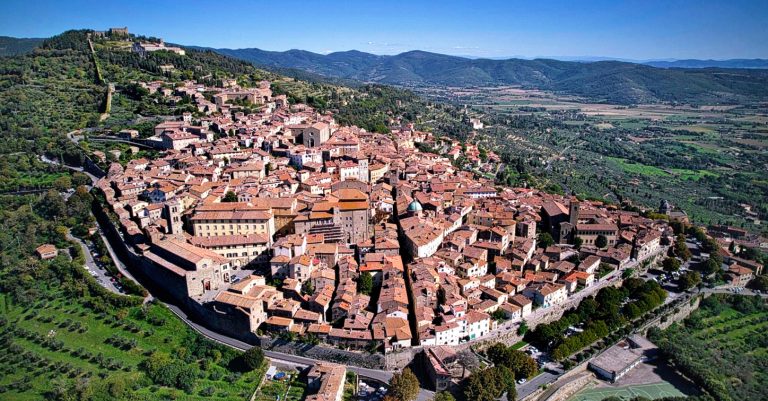
I drive to Montepulciano regularly from Cortona — forty minutes by the direct road, considerably longer and considerably more beautiful by the back roads through the Val di Chiana. I have been going long enough to know which cellars are worth your time, what to order, what to ask, and what the tourist version of Montepulciano looks like versus the real one.
Here is what I know.
The Wine — What You Are Tasting
Before the cellars, the wine itself deserves some explanation — because Vino Nobile di Montepulciano is frequently confused with Montepulciano d’Abruzzo, a completely different wine from a completely different region, and the confusion does justice to neither.
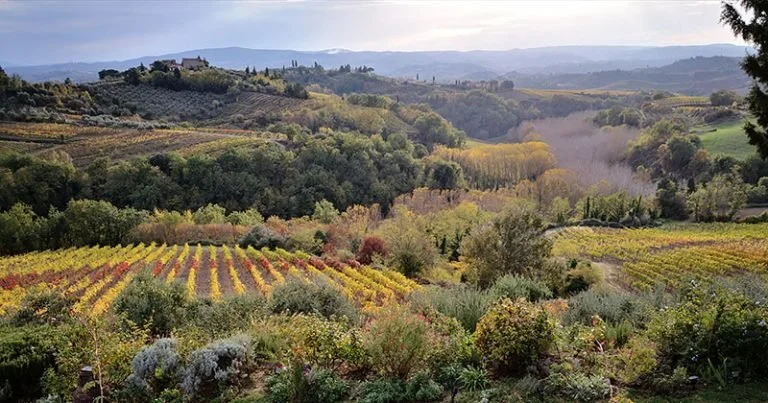
Vino Nobile di Montepulciano is a DOCG wine — the highest classification in the Italian wine system — made primarily from Sangiovese (called Prugnolo Gentile locally) grown on the hills around the town of Montepulciano in southern Tuscany. It has been produced here since at least the 8th century. The poet Francesco Redi called it “the king of all wines” in 1685, which is either excellent marketing or genuine assessment depending on your palate.
The wine is aged for a minimum of two years before release — three for the Riserva — which gives it a structure and complexity that younger wines cannot replicate. At its best, Vino Nobile is a wine of considerable depth: dark cherry and plum fruit, leather and tobacco notes from the aging, a firm tannic structure that rewards food pairing, and a finish that goes on longer than you expect.
The town also produces Rosso di Montepulciano — a younger, lighter wine made from the same grapes, released after one year rather than two. This is the everyday drinking wine of the region, significantly less expensive than the Nobile, and at its best genuinely excellent. Do not overlook it.
And there is Vin Santo — the sweet amber dessert wine made from dried grapes, aged in small barrels for a minimum of three years. Served with cantucci biscuits for dipping, it is one of the great simple pleasures of Tuscan food culture.
How Wine Tasting in Montepulciano Actually Works
Most visitors to Montepulciano do one of two things: they walk into the first enoteca they find on the main street, taste whatever is poured, buy a bottle, and leave. Or they book a formal winery tour through a tour operator, arrive by bus with fifteen other people, and receive a managed experience that tells them everything except what they actually want to know.
Neither of these is wrong. Both of them miss the best of what Montepulciano offers.
The best way to taste in Montepulciano is to go directly to the cantinas — the wine cellars that the producers themselves operate in the town — and taste with the people who made the wine. Most of the major producers have cantinas in the center of town, carved into the tufa rock beneath the medieval buildings, where you can taste a range of their wines in the actual environment in which they were aged.
This requires no advance booking for most cantinas — you simply walk in. What it does require is time. Not the thirty minutes that a rushed wine stop allows, but two to three hours at minimum — time to taste slowly, to ask questions, to compare different vintages, to eat something between tastings so your palate stays functional.
Go in the morning if possible. The cantinas are quieter before noon. The people pouring are more available for conversation. The wines show better before the heat of the afternoon.
The Cantinas Worth Your Time
Every recommendation below is based on personal visits and my own assessment. I have no commercial relationship with any of these producers. I recommend them because they are good.
Cantina Contucci The oldest cantina in Montepulciano — the Contucci family has been producing wine here since the 15th century and the cantina beneath the Palazzo Contucci in the main piazza has been in continuous operation for most of that time. The cellars are extraordinary — vast barrel rooms carved into the rock, lined with enormous Slavonian oak barrels that are themselves centuries old. The tasting is informal and generous. The Riserva is one of the finest expressions of Vino Nobile available.
Avignonesi One of the most respected producers in the appellation — biodynamic farming, consistent quality across the range, and a Vin Santo that is genuinely among the best in Tuscany. The cantina experience here is more structured than some others, which suits visitors who want guidance and context alongside the tasting.
Boscarelli A smaller producer, less well known internationally than some, but consistently producing Vino Nobile of exceptional quality. The family runs the cantina personally — the experience is intimate, the wines are serious, and the Riserva is worth seeking out specifically.
Cantina de’ Ricci Located in one of the most remarkable cellars in Montepulciano — medieval vaulted rooms that descend several levels beneath the town, with a collection of historical wine equipment and artifacts alongside the current production. The wines are good, the setting is extraordinary.
What to Eat
Wine tasting in Montepulciano without eating is a waste of good wine and a reliable path to an unpleasant afternoon. Montepulciano has excellent food, and the combination of the local wine with the local food is one of the great simple pleasures of a day in this town.
Pici — the thick hand-rolled pasta of southern Tuscany, served with wild boar ragù or a simple tomato sauce — is the dish to eat in Montepulciano. It is everywhere, it is reliably good, and it is exactly the kind of carbohydrate infrastructure that allows you to continue tasting wine through the afternoon without consequences.
The bistecca alla Fiorentina from Chianina cattle — the same breed raised in the Val di Chiana below Cortona — appears on most menus and is worth ordering if you are staying for a full meal. The combination of Chianina beef and Vino Nobile Riserva is not accidental — it is a pairing that has been refined over centuries of people eating together in this valley.
For something lighter between cantina visits: the local cheese shops carry pecorino from the surrounding area in various stages of aging. Young pecorino with honey and a glass of Rosso di Montepulciano is a combination that costs almost nothing and tastes considerably better than that suggests.
The Drive — Which Road to Take
From Cortona, there are two roads to Montepulciano. I take the direct road when I am going for a specific purpose and time is relevant. I take the back road when I want the drive to be part of the experience.
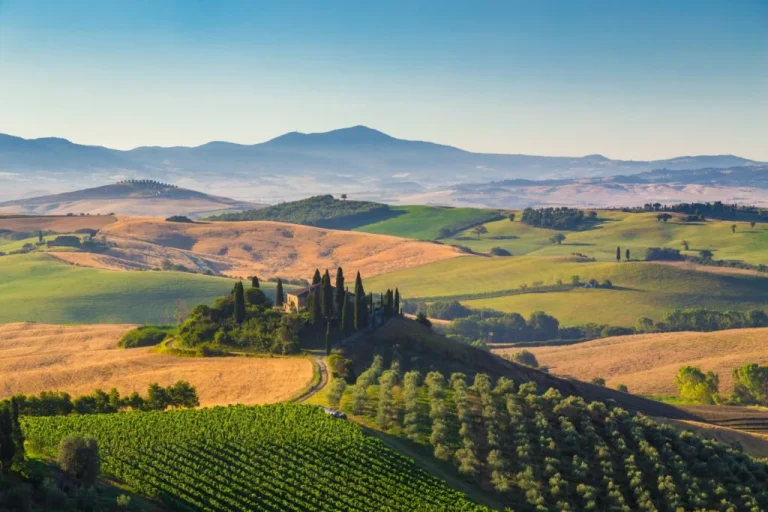
The back road runs south from Cortona through the agricultural Val di Chiana — flat, geometric, the fields and farmhouses arranged in the pattern that centuries of agricultural management have imposed on this landscape. It crosses the valley floor and then climbs into the hills of southern Tuscany as you approach Montepulciano, the road becoming progressively more winding and the views becoming progressively more extraordinary.
Cypress trees line the ridges in the way that cypress trees line ridges in Tuscany — not for decoration, though the decoration is extraordinary, but as windbreaks, planted by farmers who understood this landscape long before anyone photographed it.
The drive takes approximately one hour by this route rather than forty minutes by the direct road. The twenty minutes is worth giving up.
Leave Cortona by mid-morning. Arrive in Montepulciano before noon. Taste through the afternoon. Drive back at golden hour, when the Val di Chiana below you is doing what it does at that hour in that light.
This is a good day.
Montepulciano with MyTuscanDays
I take guests to Montepulciano regularly as part of private Tuscany experience days from Cortona. The format I use is simple: drive the back road, arrive at the first cantina when it opens, taste through the morning with guidance and context, eat lunch at a restaurant I know, visit one or two more cantinas in the afternoon, drive back through the valley at golden hour.
No bus. No group. No itinerary that cannot change if something more interesting presents itself along the way.
If this sounds like the right way to spend a day in southern Tuscany — it is.
📍 Cortona, Tuscany, Italy 👉 Explore Experiences 👉 Reserve Your Day 📩 [email protected]