How to Plan a Week in Tuscany Without a Tour Operator
Most package tours of Tuscany operate on the same model: cover the maximum number of notable places in the minimum amount of time, deliver the highlights efficiently, return the client to their departure point having seen everything on the list.
This model is not wrong. It is optimized for breadth. If the goal is to collect as many Tuscan experiences as possible in seven days, it delivers.
The problem is that Tuscany does not respond well to breadth optimization. This is a region that rewards depth — time spent in one place long enough for the place to reveal itself, meals that take as long as they take, roads driven slowly enough to stop when something requires stopping. The Tuscany that most people dream about — the quiet version, the ancient version, the version where time moves differently — is not accessible to a schedule that requires you to be in three different towns before 6pm.
Here is a different model. Seven days. A local base. No tour operator. The real thing.
The Principle: Base Yourself, Not Circuit Yourself
The single most important decision in planning a week in Tuscany is where to base yourself.
Most tourists base themselves in Florence and make day trips. This is understandable — Florence has the most accommodation options, the best transport connections, and the most obvious things to see. It is also the least efficient base for experiencing the Tuscany that is worth experiencing, because most of the best of southern Tuscany is two hours from Florence and the round trip leaves you with an afternoon in the place you actually went to see.
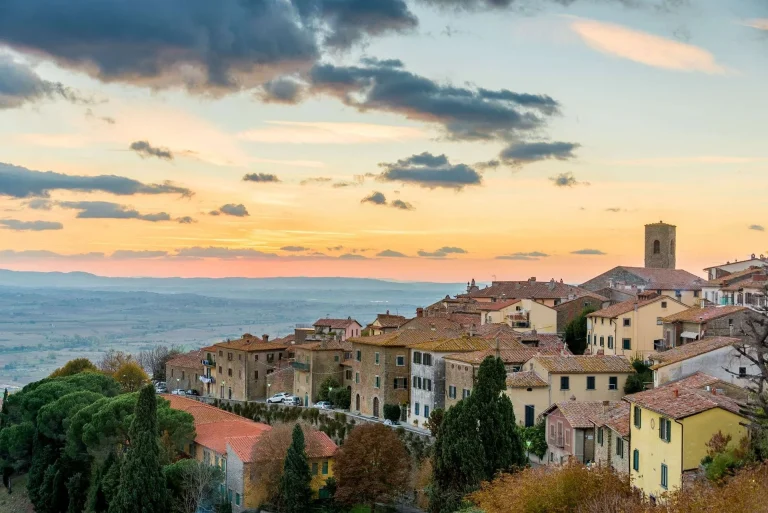
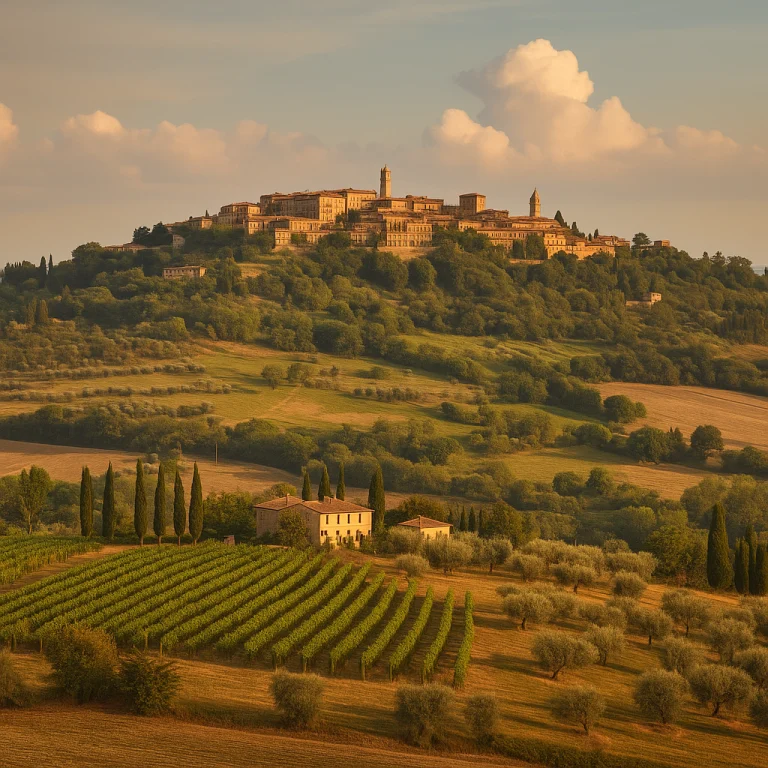
Base yourself instead in southern Tuscany. Cortona, Montepulciano, Pienza, or Montalcino are all viable bases. Each has accommodation ranging from basic to very comfortable. Each is within an hour of several other significant destinations. None of them require you to navigate Florentine traffic.
From Cortona specifically — which is where I would tell you to base yourself — you can reach Montepulciano in forty minutes, the Val d’Orcia in an hour, Assisi in an hour and a half, Siena in ninety minutes, and Florence in an hour and a half for the day you decide to go. Everything in southern Tuscany is closer than the map suggests because the roads are good and the distances are not large.
The Seven Days — A Framework for a Week in Tuscany
This is a framework, not an itinerary. An itinerary tells you where to be and when. A framework tells you what the week might contain and lets you fill it according to your pace and interests. The distinction matters — the best moments of any Tuscany trip are the ones that were not planned.
Day 1 — Arrive and settle: Arrive in the morning if you can. Check in. Walk. Eat lunch somewhere local. Spend the afternoon getting to know the town you are in — not visiting its attractions, simply walking its streets and allowing yourself to arrive. Eat dinner late. Sleep.
The impulse to optimize your first day, to see as many things as possible because you have already paid for this day, is the enemy of a good week in Tuscany. Resist it. You have seven days. The first one is for arriving.
Day 2 — Your base town, properly: Spend a full day in the town where you are based. In Cortona: the Etruscan walls at dawn, the MAEC museum, lunch somewhere local, the upper neighborhoods in the afternoon, the passeggiata at 7pm. Do not leave the town. Understand where you are before you go anywhere else.
Day 3 — First day trip: Montepulciano and the wine cantinas. Drive the back road rather than the fast road. Arrive before noon. Taste in the cantinas. Eat lunch. Drive back at golden hour through the Val di Chiana.
Day 4 — The sacred and the ancient: Le Celle in the morning — the Franciscan hermitage where Francis of Assisi prayed, ten minutes from Cortona. The Tumulo del Sodo in the afternoon — the Etruscan burial mound just below the hill. Return to the base town. Aperitivo on a terrace.
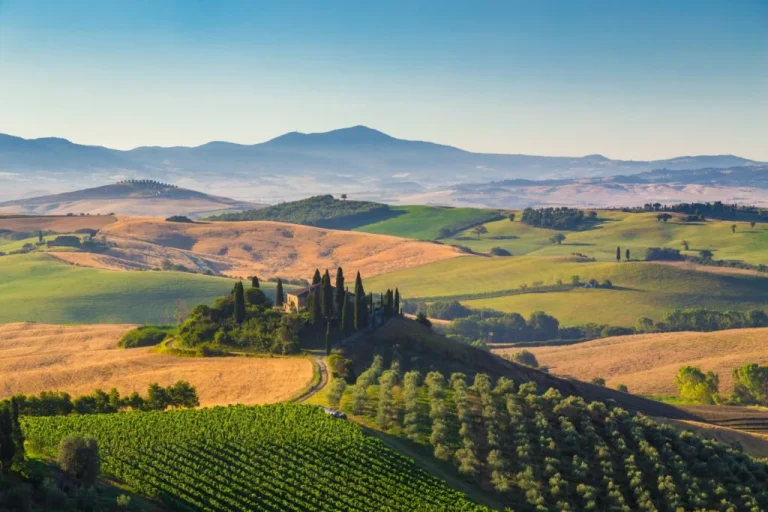
Day 5 — Val d’Orcia: Drive south into the Val d’Orcia. Pienza for the view and the pecorino. Bagno Vignoni for the thermal pool in the center of the village. Montalcino for Brunello if the budget permits. Drive back through the hills in the late afternoon.
Day 6 — A slower day: Do not schedule anything significant. Go to the market if it is the right day. Read a book somewhere with a view. Walk a road you have not walked yet. Eat lunch at a place you noticed on a previous day and wanted to return to. Have a nap. This is not wasted time — it is the day that allows everything else to settle.
Day 7 — Florence, if you want it: A day in Florence at the end of the week rather than the beginning makes sense if you want it — you have had six days of Tuscany and the art and architecture of the city will mean something different than it would have on day one. Go in the morning, visit what you most want to see, eat lunch in the city, return to your base in the afternoon, eat your last Tuscan dinner where you have been eating all week.
Practical Details
Car: A car is essential for this kind of week. The distances are manageable, the roads are good, and the places worth going to are not all on public transport routes. Rent an automatic if you prefer — Italian driving is not as terrifying as it is sometimes described, but a manual transmission on steep hill town roads in an unfamiliar car adds unnecessary complexity.
Accommodation: Book accommodation in a single place for the full week, not multiple places. Moving accommodation every two days destroys the sense of settling in that makes a week in Tuscany work. A small hotel, a B&B, or an apartment rental — whichever suits your preference and budget.
Restaurants: Do not book restaurants in advance. The best local places do not have online booking systems and the best meals happen when you walk into a place that looks right and discover it is exactly what you needed. Keep one or two names in reserve for backup.
Pace: Resist the impulse to fill every hour. The best thing that can happen in Tuscany is an afternoon that goes differently from what you planned — a conversation that turned into lunch, a road that led somewhere unexpected, a viewpoint that turned out to be extraordinary and that you spent an hour at without meaning to. This only happens if the schedule has space in it.
One Day with a Local Guide
Even in a self-planned week, one day with a local guide recalibrates everything. Not a formal tour — a private day with someone who lives in the place you are visiting, knows the local producers, the unreported viewpoints, and the trattorie that the guidebooks have not found yet.
That day changes what you see on the days before and after it. The knowledge you acquire is available for the rest of the week.
MyTuscanDays offers exactly this — private day experiences from Cortona into southern Tuscany, built around your interests and pace.
📍 Cortona, Tuscany, Italy 👉 Explore Experiences 👉 Reserve Your Day 📩 [email protected]