A Morning in Cortona — What Slow Life Actually Looks Like
6:47am. Church bells.
Not an alarm. Bells — from the campanile of Santa Maria delle Grazie, which has been ringing at this hour from this tower for centuries. You do not resent them. They have been doing this since long before you arrived and will continue long after you leave, and there is something in that continuity that makes waking up to them feel different from waking up to a phone.
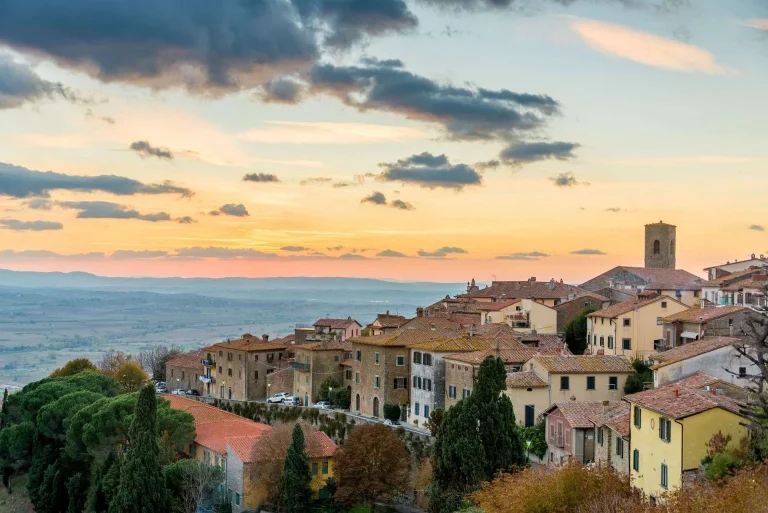
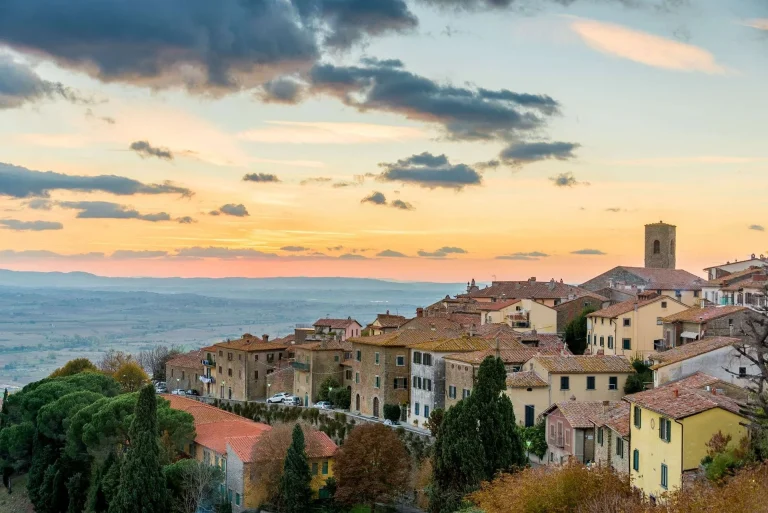
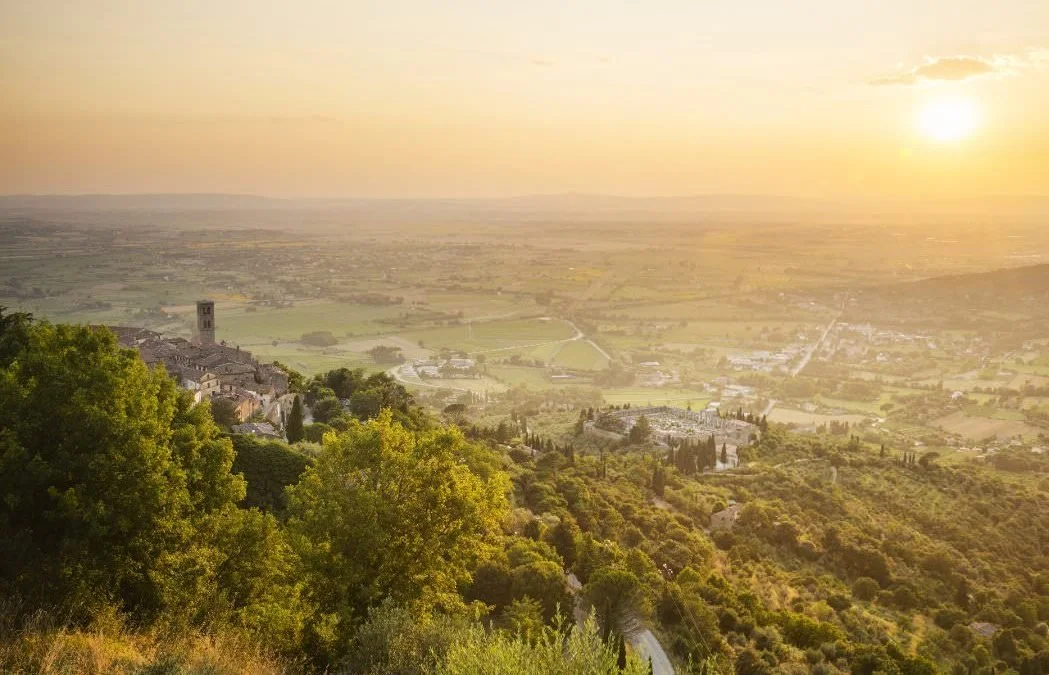
You open the shutters. The Val di Chiana below is still under a layer of white mist — the flat agricultural valley that spreads south from the foot of the hill, its cypress trees just visible above the mist like dark brushstrokes on white paper. The air that comes through the window is cool and smells of damp stone and something green. The light is the specific pale gold of early morning in Tuscany — not yet warm, not yet directional, the kind of light that makes everything look slightly unreal.
This is what a morning in Cortona looks like. Here is the rest of it.
The Walk Before Breakfast
The upper part of Cortona — the area near the Etruscan walls above the historic center — is at its best in the hour after sunrise. The tourists have not yet arrived. The residents who are awake are moving through their morning routines with the quiet efficiency of people who do not need to perform being awake for anyone.
The streets in the upper neighborhoods are narrow enough that you can touch both walls simultaneously in some sections. The stone underfoot has been worn smooth and slightly concave by centuries of feet. A cat is sitting on a wall in the exact position it has been sitting in, presumably, since before you were born, and it watches you pass with the incuriosity of something that has seen a great deal of human movement and found none of it particularly remarkable.
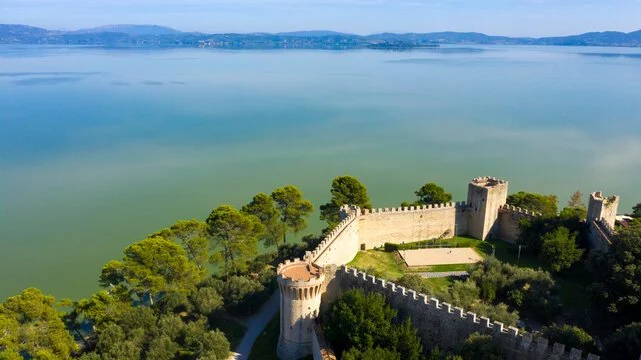
The view from the Etruscan walls changes as the mist burns off. First the tops of the cypress trees, then the farmhouses, then the full breadth of the valley, then Lake Trasimeno appearing to the south as the atmosphere clears. By 8am the view is complete and the light has turned from pale gold to the warmer, more directional light of mid-morning.
You have been awake for an hour and a quarter. You have not checked your phone. You have not read anything or listened to anything. You have simply been somewhere extraordinarily beautiful while it woke up.
The Espresso
The bar on the corner of Via Nazionale opens at 7:30. By 8am there are five or six people standing at the counter — a man in work clothes who is clearly on his way somewhere, two women who know each other and are conducting a conversation that has no beginning and no end visible from the outside, an older man in a jacket who comes here every morning and has done so for years and will do so for years more.
You order an espresso. The barista makes it without asking how you want it because there is only one way to want it and everyone here knows what that is. You stand at the counter. You drink it in two sips. You pay — €1.20, the same price it has been for as long as anyone can remember. You say buongiorno to the room in general, which produces a buongiorno from the room in general, and you leave.
This has taken eight minutes. In those eight minutes you have participated, briefly and imperfectly, in a social ritual that has been organizing Italian mornings for as long as the espresso machine has existed. You have been seen, acknowledged, and included in the ambient community of the morning in a way that sitting at a table with a laptop never produces.
The Market (Saturday)
If it is Saturday, the lower piazza has been transformed since early morning by the weekly market.
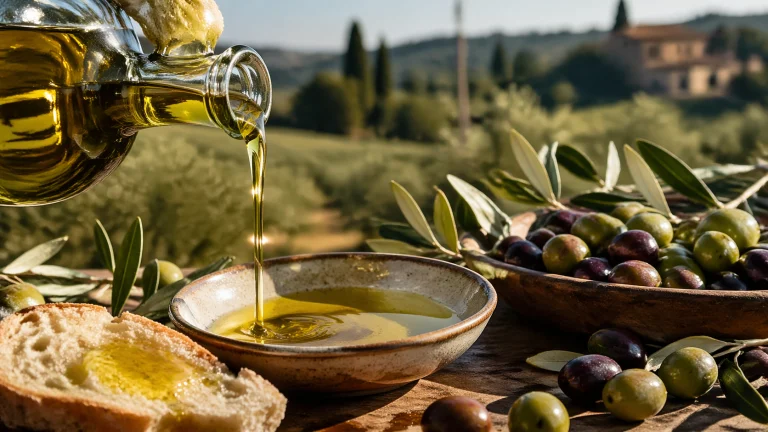
The farmers from the Val di Chiana arrived before dawn and set up their stalls with what they have that week. Not what the market research said consumers want. What the land produced. The tomatoes that are ready are the tomatoes available. The cheese is the cheese that was made this week. The olive oil is from the most recent pressing, poured from unlabeled bottles by a man who can point to the specific grove where the olives grew.
Shopping at this market takes three times longer than it should. This is because it is not primarily a commercial transaction — it is a social event. The woman buying vegetables from the same farmer she has been buying from for twenty years stops to ask about his family. The man selling cheese gives you a piece to taste before you decide. The conversation is the point, not the efficiency.
You leave with a bag of things that will become lunch. You have spent perhaps €15. You have had four conversations, understood two of them partially, and been included in the morning life of a community that has nothing to sell you except what it actually produces.
The Bread
The forno — the bakery — on the street behind Via Nazionale opens early and by mid-morning the bread is ready.
Tuscan bread is unsalted. This surprises most visitors and offends some of them. It is unsalted because it has been unsalted since the medieval period, when salt was heavily taxed in the Papal territories and the Tuscans adapted by developing a bread that was designed to carry the salt of everything eaten with it — the cured meats, the cheeses, the olive oil, the preserved vegetables that constitute the backbone of the local cuisine.
Buy a loaf. Take it home and pour olive oil on a piece of it — good olive oil, the kind that burns slightly at the back of your throat. Eat it standing at the kitchen counter. This is breakfast in Cortona on a Saturday morning and it is significantly better than it has any right to be.
The Quiet Middle of the Morning
By 10am the town has arrived at its mid-morning rhythm. The bars are still busy. The shops have opened. The tourists who are going to come today have begun to arrive on the buses from the train station at Camucia.
This is the time to go somewhere the buses do not go.
The upper neighborhoods — above Via Nazionale, past the point where the obvious tourist path ends — are quiet at any hour but especially at this one. The piazzas that have no cafes and no tourist infrastructure. The streets too steep and narrow for anyone in a hurry. The views that are not on any itinerary because nobody told the itinerary writers they existed.
Spend an hour here. Walk slowly. Look at things. Do not photograph everything. Let some of it be only in your memory, which keeps things differently from a camera.
What a Morning in Cortona Costs
The espresso: €1.20 The market shopping: €12-18 depending on what you buy The bread: €2.50 The time: three to four hours
What you cannot purchase: the bells, the mist, the cat on the wall, the view as the valley clears, the buongiorno from the room in general, the farmer who points to the grove where the olives grew.
These are free. They are also the point.
Experience a Morning in Cortona with MyTuscanDays
MyTuscanDays experiences often begin before the town is fully awake — because the best of Cortona happens in the early hours and most itineraries miss it entirely.
Private day experiences in Cortona, built around the pace that this town actually operates at.
📍 Cortona, Tuscany, Italy 👉 Explore Experiences 👉 Reserve Your Day 📩 [email protected]