Dolce Far Niente — The Italian Art of Doing Nothing
There is a phrase in Italian that has no direct translation in English. Not because the concept is too complex to express in other languages — but because the cultures that speak those other languages have largely decided that the thing it describes is not worth naming.
Dolce far niente.
The sweetness of doing nothing.
In English, we have words for the absence of activity: lazy, idle, unproductive, resting. Every one of them carries a judgment — either negative, or conditional on some future productivity the rest is meant to serve. Even “rest” implies a purpose: you rest in order to recover, in order to work again, in order to perform better later.
Dolce far niente describes something different. Not rest in service of future productivity. Not a pause between activities. The thing itself — the present, direct, unqualified pleasure of being alive and not doing anything in particular — as a complete and sufficient experience.
Italy has been practicing this for centuries. The rest of the world is beginning to suspect it might be onto something.
What It Is Not
Before describing what dolce far niente actually is, it is worth being precise about what it is not — because it is frequently misunderstood in both directions.
It is not laziness. Laziness implies an avoidance of things that should be done. Dolce far niente is practiced by people who have done what needed to be done and are now, deliberately and without guilt, doing nothing. The Tuscan farmer who works from dawn through harvest and then sits on a terrace watching the evening light does not lack ambition or discipline. He has a perfectly calibrated relationship with the difference between work time and not-work time.
It is not a wellness practice. The moment dolce far niente becomes a wellness practice — scheduled, tracked, optimized for recovery outcomes — it has already ceased to be itself. You cannot practice it instrumentally. The sweetness comes precisely from the absence of purpose. The moment doing nothing becomes a means to an end, it is no longer nothing.
It is not boredom. Boredom is the experience of time passing without meaning. Dolce far niente is the experience of time passing with complete sufficiency — the feeling that this moment, exactly as it is, with nothing happening in it, is enough. More than enough. Actually rather wonderful.
The Philosophy Behind It
To understand dolce far niente properly, you need to understand the Italian relationship with time — which is fundamentally different from the Northern European or American relationship with time.
In productivity cultures, time is a resource to be allocated. An hour spent doing nothing is an hour that could have been spent doing something — and the implicit assumption is that doing something is always preferable to doing nothing. Time has value only when it is being used.
The Italian understanding is different. Time has value in itself — not as a container for activity but as the medium in which life actually happens. An afternoon sitting in a piazza watching the light change is not wasted time. It is the afternoon. It is your life. The question is not what you did with it but whether you were present for it.
This is not a philosophical position that Italians consciously articulate. It is simply how life is organized — structurally, architecturally, in the rhythm of the day. The long lunch creates a daily pause that has no productive purpose. The passeggiata creates an evening ritual of gentle, purposeless presence. The aperitivo creates a transition between day and evening that belongs to neither.
These structures make dolce far niente the default rather than the exception. You do not have to try to do nothing. The day is organized so that nothing happens regularly and unavoidably.
What Dolce Far Niente Feels Like in Tuscany
The first time you genuinely experience dolce far niente in Tuscany, you will probably not recognize it for what it is.
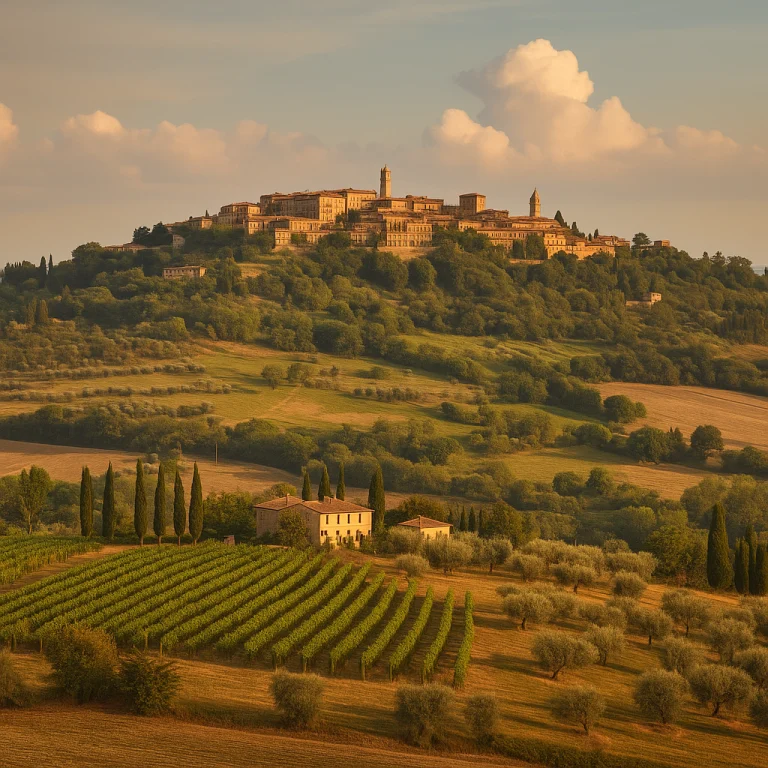
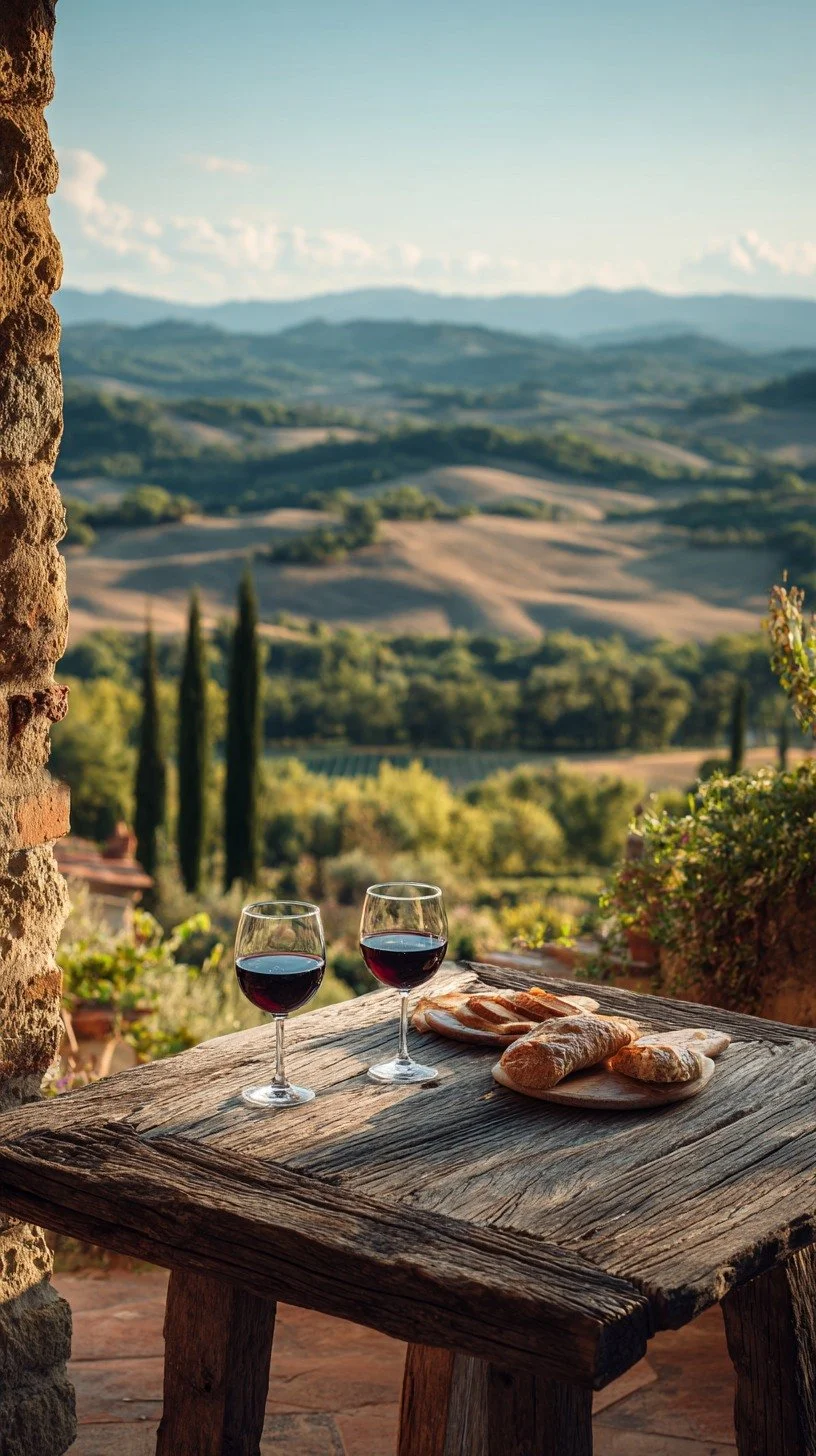
You will be sitting somewhere — a terrace, a piazza bench, a hillside above the town — and you will notice that you have not checked your phone in a while. You will notice that the thought that was occupying you an hour ago has gone quiet. You will notice that you are looking at the view — really looking at it, not photographing it or describing it to yourself or planning what to do next — and that the looking is completely absorbing without being effortful.
Time will have slowed down in a way that is not tedious but spacious. There will be room in the moment for things that normally get crowded out — physical sensation, ambient sound, the specific quality of the light at this hour on this afternoon.
You will feel, briefly, completely present. Not mindfully present in the self-conscious way of someone practicing mindfulness, but actually present in the simple way of someone who has temporarily stopped being anywhere else.
This is dolce far niente. And it is available in Tuscany in a way that it is available in very few other places — because the physical environment, the pace of the community, and the cultural permission to simply be somewhere without producing anything all conspire to make it possible.
How to Find It
Dolce far niente cannot be scheduled or forced. But certain conditions make it more likely.
Choose the right time of day. The Tuscan afternoon — roughly 2pm to 5pm — is when the town slows to its most genuinely unhurried pace. The lunch rush is over. The evening has not begun. The streets are quiet. The light is warm and horizontal. This is the natural time for nothing.
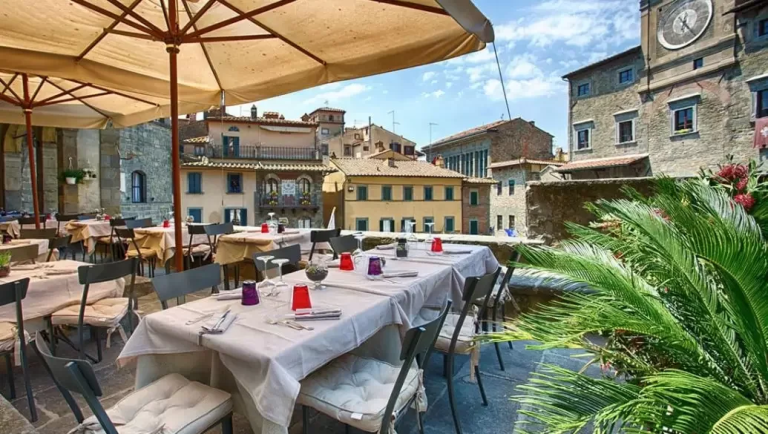
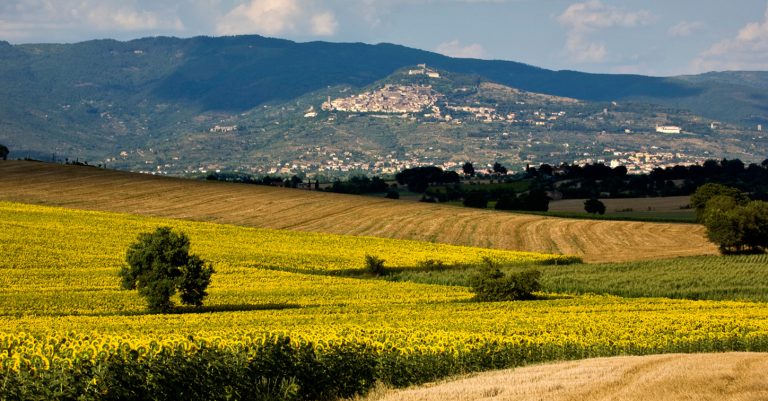
Choose the right place. A terrace with a view over the Val di Chiana. A bench in a quiet piazza above the tourist areas. A step on the Etruscan walls. Somewhere that rewards looking without demanding anything.
Leave your phone in your pocket. Not turned off — just not in your hand. The physical habit of reaching for it will fade within about fifteen minutes if you let it.
Have no plan for at least two hours. The awareness that you need to be somewhere at a specific time prevents the full arrival into nothing that dolce far niente requires. Two hours of genuine unscheduled time is the minimum.
Let it be uncomfortable for the first twenty minutes. It will be. The productivity guilt, the sense that you should be doing something, the restlessness — these are real and they take time to pass. Let them pass without acting on them. What comes after is worth it.
Why It Matters Beyond Tuscany
The research on what happens to human beings during genuine unstructured time is consistent and compelling. The brain’s default mode network — active during rest and mind-wandering — is responsible for memory consolidation, emotional processing, creative insight, and the construction of a coherent sense of self. Constant stimulation and task-focus suppress this network. The result, over time, is the specific kind of exhaustion that sleep does not fix — a depletion of the cognitive and emotional resources that make life feel meaningful rather than merely busy.
Dolce far niente is, among other things, the systematic practice of allowing the default mode network to do its work. The Tuscans have been doing this without knowing the neuroscience, because the felt experience of its benefits is so immediate and obvious that no scientific explanation is required.
You come back from a Tuscan afternoon of doing nothing feeling more yourself. More capable. More present. With access to thoughts and feelings that were not available before.
This is not a side effect of a holiday. It is a direct result of giving your mind the unstructured time it needs to function properly.
Experience It With MyTuscanDays
The most valuable thing we can give you during a MyTuscanDays experience is not a fuller itinerary. It is permission and space to do less.
Every experience we design includes unscheduled time — not as padding, but as substance. The afternoon that belongs to you. The moment that is not planned. The view that has no agenda.
We call it a day in Tuscany. The Italians call it dolce far niente.
Come and find out what the sweetness of doing nothing actually feels like.
📍 Cortona, Tuscany, Italy 👉 Explore Experiences 👉 Reserve Your Day 📩 [email protected]