Cortona vs Siena — Which One Is Worth Your Time?
This comparison is not a competition. Both Siena and Cortona are extraordinary places — genuinely, specifically extraordinary in ways that justify every positive thing written about them. The question is not which one is better but which one is right for you, on this trip, given what you are actually looking for.
I live in Cortona. I have obvious skin in this game. I will try to be honest anyway.
Siena — What It Is and What It Offers
Siena is one of the best-preserved medieval cities in Europe. Its historic center — a UNESCO World Heritage Site — was built primarily between the 12th and 15th centuries and has changed relatively little since. The Piazza del Campo is one of the great public spaces in the world: a shell-shaped brick piazza sloping gently toward the Palazzo Pubblico, flanked by medieval palazzi, used continuously as the center of Sienese civic life for seven hundred years.
The Duomo di Siena is among the most significant Gothic cathedrals in Italy — more ambitious in its decoration, more varied in its materials, more complex in its program than most visitors expect. The Museo Civico in the Palazzo Pubblico contains frescoes by Simone Martini and Ambrogio Lorenzetti that are among the masterworks of Italian medieval painting.
The Palio — the horse race held in the Piazza del Campo twice yearly, in July and August — is one of the most intense and genuinely Sienese events in Italian civic life: not a tourist spectacle but a competition between the seventeen contrade of the city that has been running in its current form since the 17th century and that produces genuine passion, genuine rivalry, and occasional genuine violence.
Siena is large enough to have a university, a functioning commercial center, and a daily life that does not revolve entirely around tourism. It is also large enough that the tourist areas and the local areas are somewhat separated — you can be in the thick of Sienese daily life ten minutes’ walk from the Piazza del Campo.
Siena is for: Art and architecture lovers. Medieval history enthusiasts. People who want a city with significant cultural institutions. Anyone who can visit during the Palio. People who want more than one town to explore from a single base — Siena’s position in central Tuscany makes it a good hub.
Cortona — What It Is and What It Offers
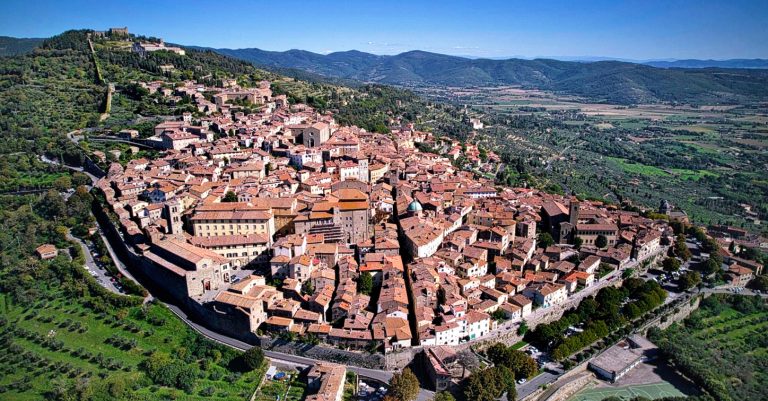
Cortona is older than Siena by a significant margin. The Etruscan walls that encircle the upper part of the town were built approximately 700 years before the birth of Christ — before Rome existed, before the medieval period that built Siena was even imaginable.
It is smaller — the historic center is compact enough to walk completely in an hour, the permanent population of the central town is measured in hundreds rather than thousands. This smallness is the point. Cortona has not been large enough, or famous enough, or easily enough accessible to be significantly modified by the infrastructure of mass tourism. It is still, in most of the ways that matter, a functioning community rather than a preserved monument.
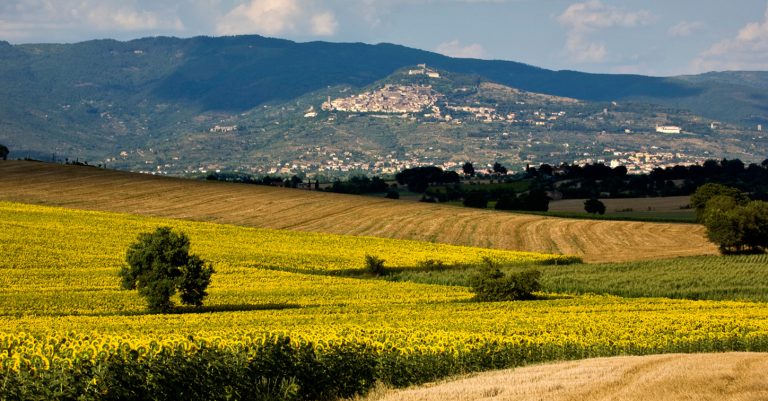
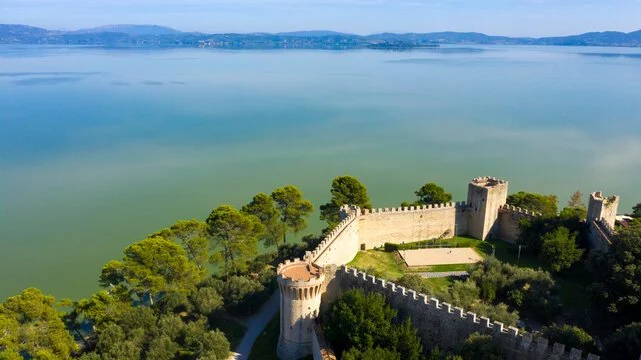
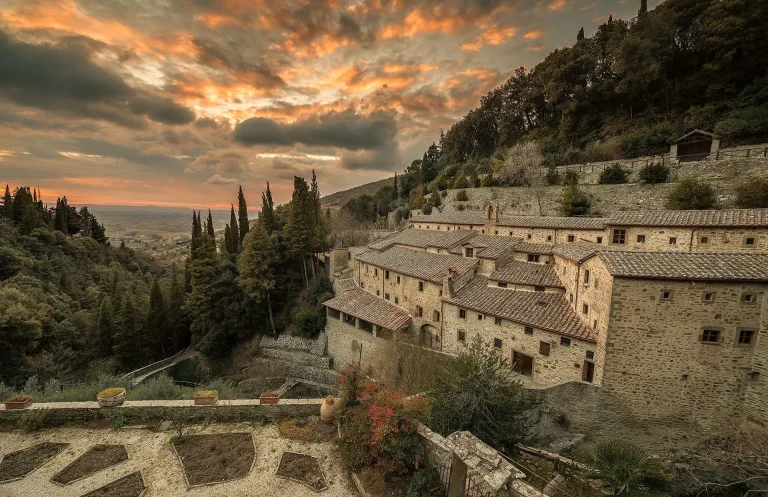
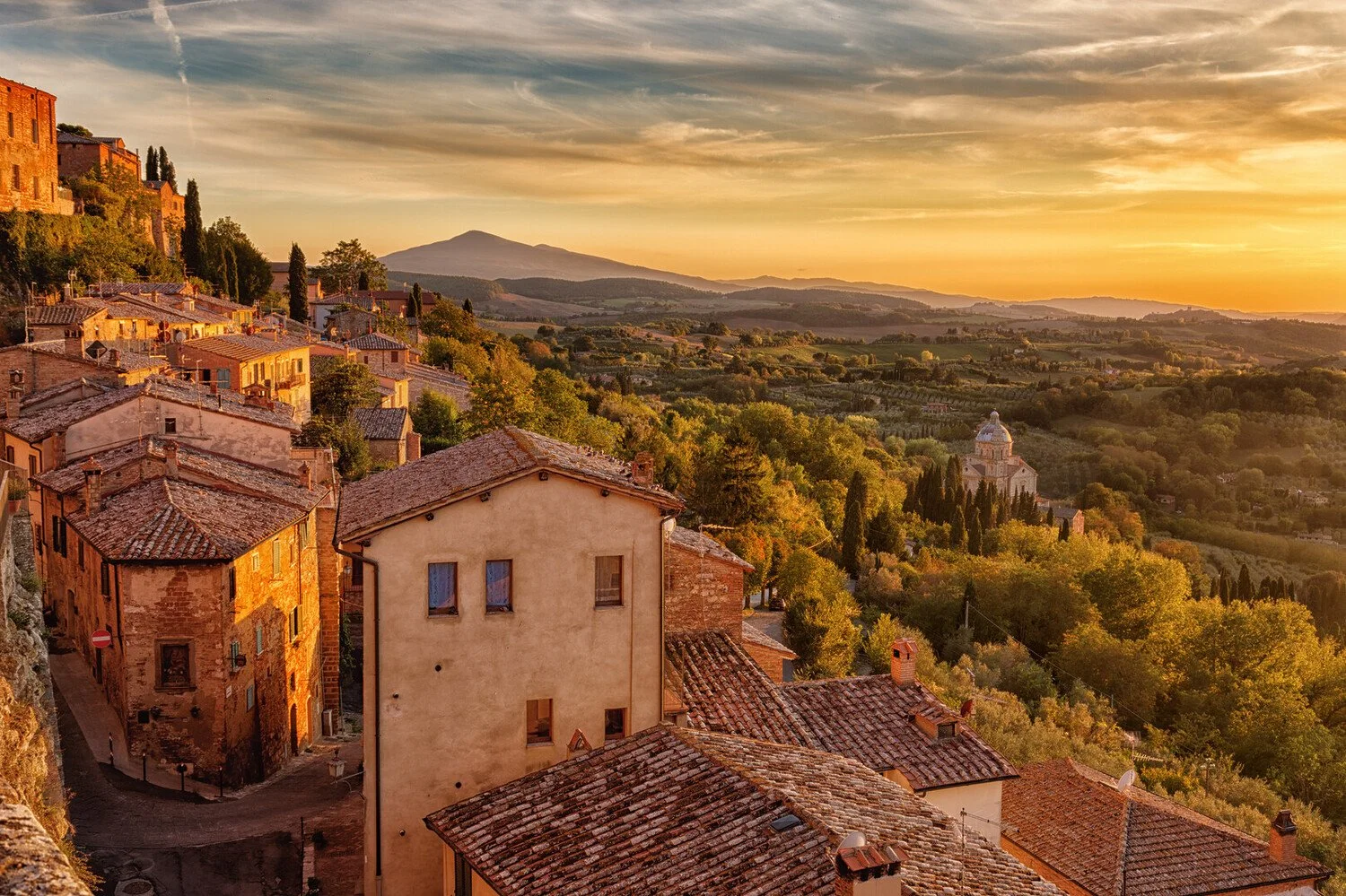
The views from Cortona are among the finest in Tuscany — the Val di Chiana spreading to the valley floor below, Lake Trasimeno visible to the south, Umbria beyond it on clear days. The Etruscan trail — the walls, the MAEC museum, the Tumulo del Sodo burial mound — is one of the most complete and accessible Etruscan experiences available anywhere in Italy. Le Celle, ten minutes from town, is a Franciscan hermitage of genuine spiritual significance that almost nobody knows exists.
Frances Mayes wrote Under the Tuscan Sun here. The Bramasole house is still on its hillside. The Saturday market is still what it has been for centuries.
Cortona is for: Travelers who want authenticity over spectacle. People who want to feel a place rather than see it. History enthusiasts whose interest extends before the medieval period. Slow travelers who want to stay in one place long enough for it to reveal itself. Anyone who has read Frances Mayes and wants to understand what she was writing about.
The Direct Comparison
Art and architecture: Siena wins clearly. The Duomo, the Palazzo Pubblico frescoes, the collection of Sienese painting — this is world-class material that Cortona cannot match. If Renaissance and medieval art is your primary interest, Siena is the answer.
Ancient history: Cortona wins. The Etruscan heritage of Cortona — walls older than Rome, the MAEC museum, the Tumulo del Sodo — is more substantial, more accessible, and more physically immediate than anything Siena offers from the pre-medieval period.
Authenticity: Cortona wins. Siena is a significant tourist destination that has adapted accordingly — the tourist infrastructure is extensive and the line between the tourist Siena and the local Siena requires effort to cross. Cortona is small enough that this line barely exists. You are in the local town immediately.
Crowds: Cortona wins significantly. Siena receives substantially more visitors than Cortona. The Piazza del Campo in high season is very crowded. Cortona in high season has more visitors than at other times of year but remains manageable — the upper neighborhoods are always quiet.
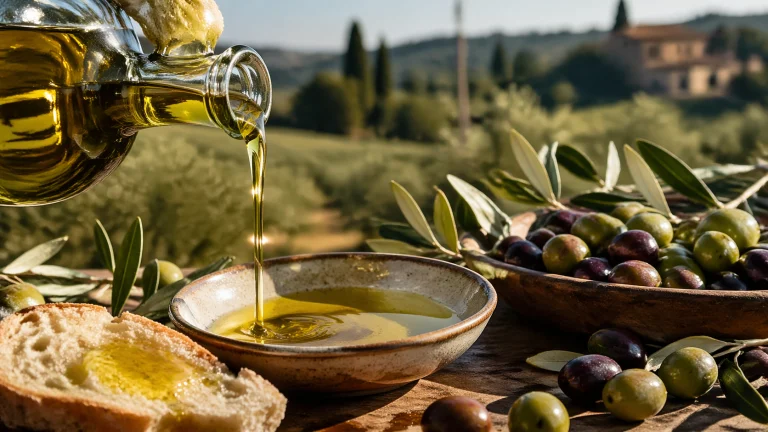
Food: Both are excellent, but for different reasons. Siena has a larger range of restaurants and a more developed restaurant culture. Cortona has the specific food culture of southern Tuscany — the pici, the Chianina bistecca, the local olive oil and wine — in a setting where eating locally is the default rather than an option.
Wine: Advantage to Cortona’s proximity. Montepulciano is forty minutes away. The Cortona DOC produces good local wine. The wine culture of southern Tuscany is immediately accessible from Cortona in a way that Siena’s position in central Tuscany does not fully replicate.
Accessibility: Siena wins. It has a major train station and bus connections to the major tourist centers. Cortona has a train station — Camucia-Cortona — but it is at the base of the hill and requires a bus or taxi to reach the historic center. A car is useful in Cortona in a way it is not strictly necessary in Siena.
The Honest Answer
If you have one day and you want to see the greatest concentration of medieval art in Tuscany outside Florence — go to Siena.
If you have two or three days and you want to feel what Tuscany actually is, at the pace it actually operates, in a place that has not been significantly modified by the demands of mass tourism — go to Cortona.
If you can do both — and the drive between them takes approximately ninety minutes through beautiful countryside — do both. Siena for the art and the piazza. Cortona for the pace and the depth.
But if you only have time for one and you are reading a guide written by someone who lives in Cortona and has spent years walking its streets and learning its layers — you know what I am going to say.
Experience Cortona with MyTuscanDays
MyTuscanDays offers private day experiences in Cortona and across southern Tuscany — the Etruscan trail, Le Celle, the upper neighborhoods, the best food and wine, and the places that no guidebook covers — guided by someone who actually lives here.
📍 Cortona, Tuscany, Italy 👉 Explore Experiences 👉 Reserve Your Day 📩 [email protected]
Cortona vs Siena: How to Decide
Cortona vs Siena is not a ranking — it is a question about the kind of day you want. Siena gives you scale, art and ceremony. Cortona gives you quiet, proximity, and the sense of being somewhere people actually live. If you have time for both, take both.