Frances Mayes and Cortona — Under the Tuscan Sun Today
In 1996, an American professor named Frances Mayes published a memoir about buying and restoring a derelict farmhouse on a hillside above Cortona, a small Etruscan hilltop town in southern Tuscany that most people outside Italy had never heard of.
The book was called Under the Tuscan Sun.
It sold millions of copies. It was translated into dozens of languages. It was made into a film with Diane Lane that reached audiences who had never read the book. It launched a thousand Tuscany dreams, inspired a generation of expats to consider Italy as a place to actually live rather than merely visit, and permanently altered the perception of Tuscany as a destination.
And Cortona — the specific town, the specific hills, the specific quality of life that Mayes described with such precision and such obvious love — became, for many readers, the idealized version of what an Italian life could look like.
Most of them never came.
This is not unusual. The distance between dreaming about a place and actually going is enormous, and for many people the dream is sufficient — or the practical obstacles are real, or the moment never quite arrives. But the people who did come — who arrived in Cortona with the book in their memory and walked the same streets and ate at the same markets and watched the same light change over the same valley — almost universally found that the reality exceeded the dream.
Here is what Cortona looks like now. And why it is still worth coming.
What Frances Mayes Found
Mayes arrived in Cortona in the early 1990s — before the book, before the fame, before Cortona appeared on any international tourist map.
What she found was a town that was, in many ways, exactly as she described it: ancient, unhurried, rooted in agricultural rhythms that had not changed fundamentally for centuries, and inhabited by people who were warm to strangers without performing warmth for them.
The house she bought — Bramasole, a 17th-century villa on the hillside above the town — was a ruin. The restoration process that forms the spine of the book is not a romantic fantasy. It is a detailed, often difficult, frequently comic account of what it actually takes to bring a serious old building back to life in a foreign country in a language you are still learning.
But around that practical core, Mayes built something more significant: a portrait of a place and a way of life that resonated with readers across cultures because it described something genuinely desirable — a life organized around beauty, pleasure, community, and the rhythms of the natural world rather than productivity and accumulation.
The book worked because it was true. Cortona really was like that. In many important respects, it still is.
What Has Changed
It would be dishonest to suggest that Cortona is identical to the town Mayes described in the early 1990s. Three decades of international fame have left traces.
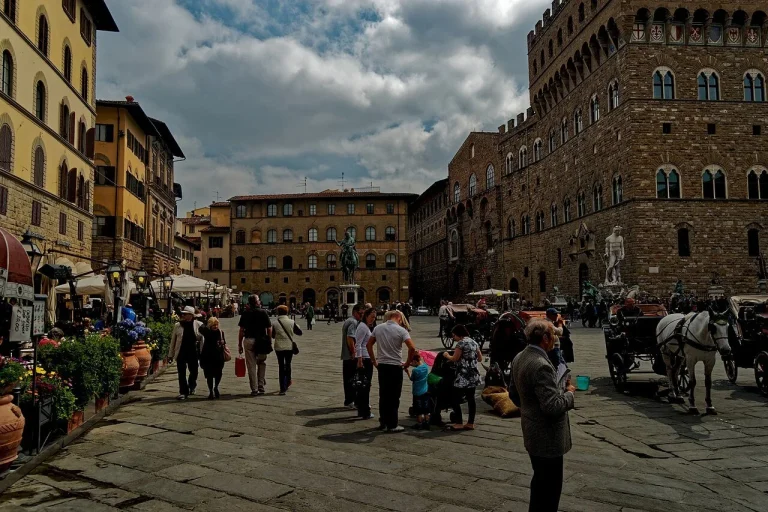
There are more tourists. The main street — Via Nazionale — has more shops oriented toward visitors than it did thirty years ago. Some of the restaurants that Mayes wrote about have changed ownership, changed character, or closed. The town is more internationally known and therefore more internationally visited, particularly in summer.
The Bramasole house itself — visible from the road below, identifiable by anyone who has read the book — attracts visitors who park nearby and take photographs from the gate. Mayes has written about this with characteristic grace, but it represents a specific kind of fame that the town did not have before the book.
These changes are real. They matter. A town that receives more tourists is a different town from one that receives fewer.
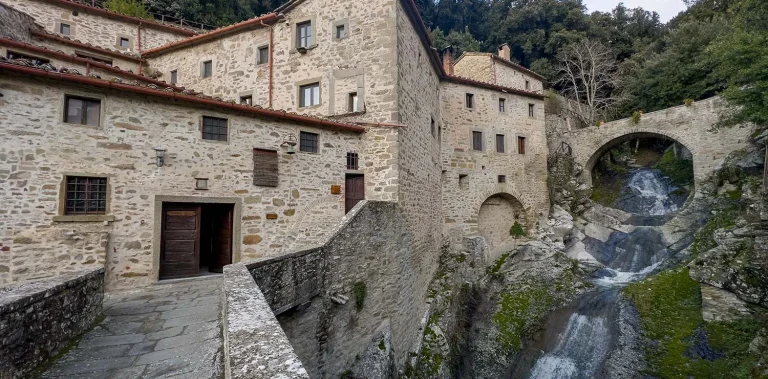
But they are also, in the broader context of what Cortona is, relatively superficial. The main street is more touristic. The streets above it are essentially unchanged. The community that has lived in this town for generations is still here, still doing what it has always done, still conducting daily life in the ways that Mayes described with such accuracy.
What Has Not Changed
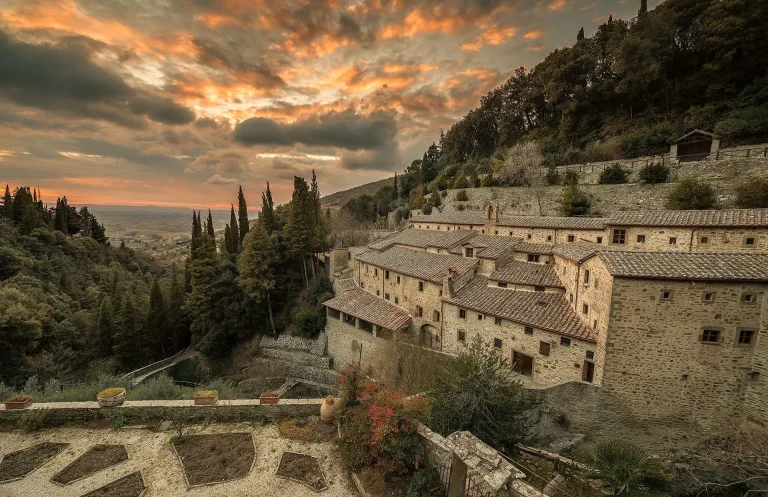
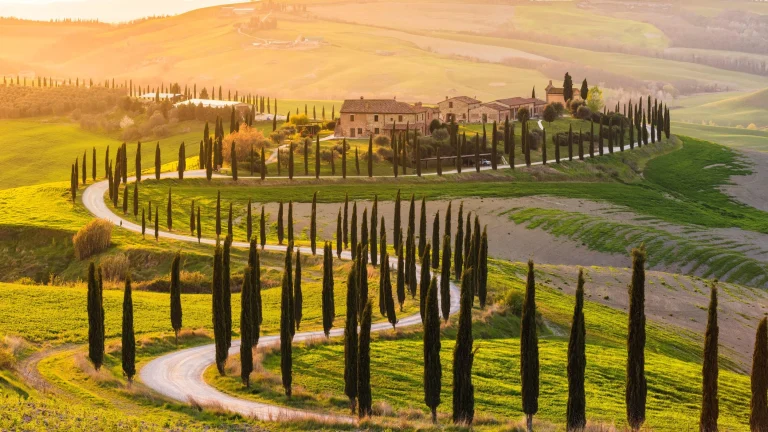
The view from the upper town over the Val di Chiana is identical to the view that appears in every page of the book that mentions looking out from a high place over a wide valley. The light that falls on it in the late afternoon is the same light. Lake Trasimeno is still visible to the south on clear days.
The Saturday market is still there — farmers from the valley bringing what they have, the transactions conducted in Italian at a pace that has nothing to do with retail efficiency, the whole event functioning as much as a social occasion as a commercial one.
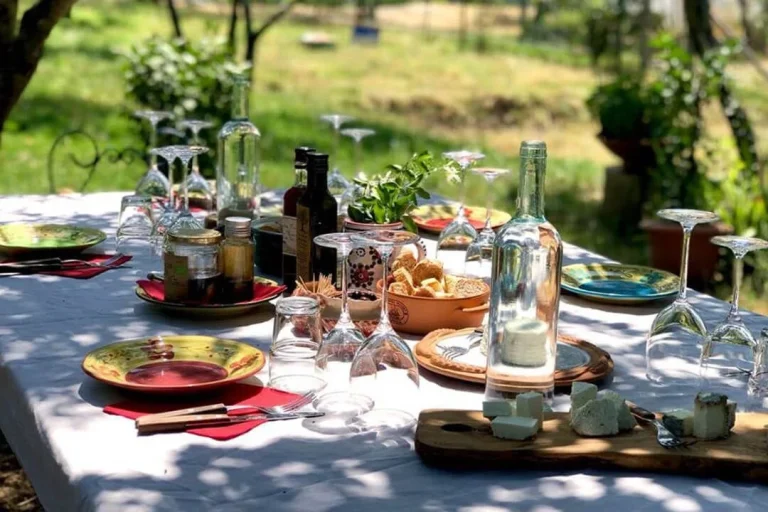
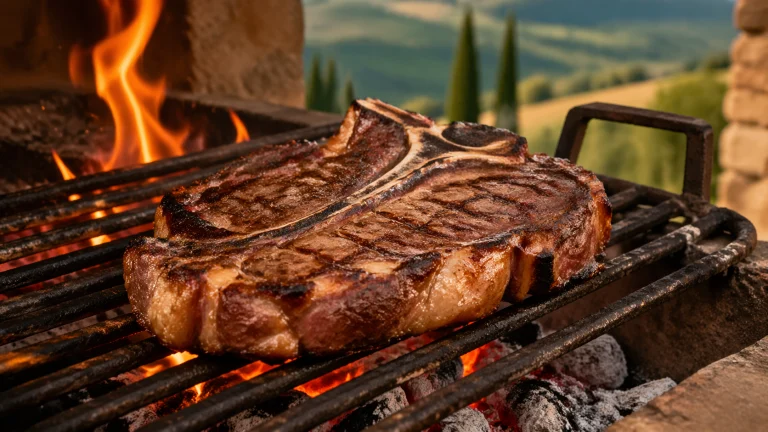
The food is still extraordinary. The bistecca alla Fiorentina from Chianina cattle raised in the valley below. The olive oil pressed from olives grown on the hillsides above the town. The local wine from vineyards visible from the restaurant window. These things have not changed because they are rooted in the agricultural reality of the landscape, which changes only on geological timescales.
The people are still warm. Not performatively warm — genuinely warm, in the specific Italian way that combines directness, generosity, and a complete absence of the social distance that characterizes public life in more reserved cultures.
And the pace is still different from anywhere else. The town still closes in the afternoon. The passeggiata still happens every evening. The espresso still costs €1.20 and is still drunk standing at the bar in two sips. The basic architecture of the Tuscan day — the rhythms that Mayes wrote about with such evident pleasure — is still intact.
Bramasole Today
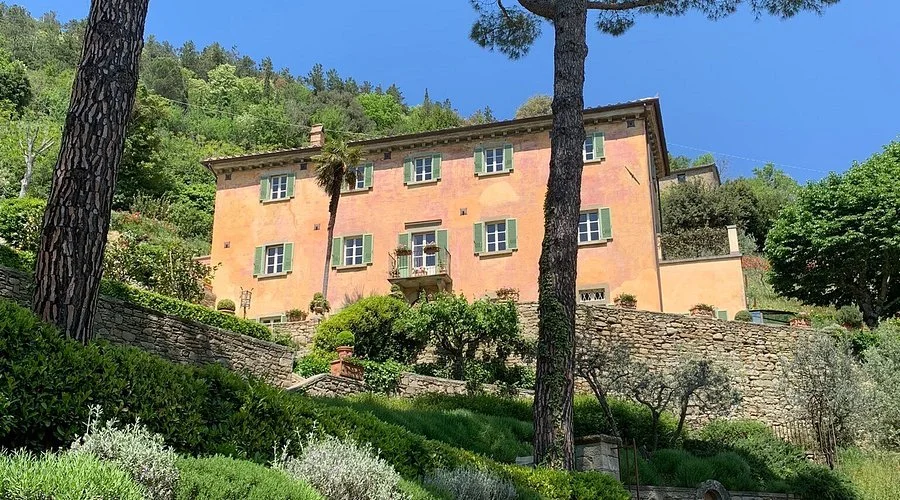
The Bramasole house is still there. Still on its hillside. Still visible from the road below, its facade and cypress trees immediately recognizable to anyone who has read the book or seen the film.
Mayes has written and spoken about Cortona and Bramasole extensively over the decades since the original book — in sequels, in interviews, in essays. She has maintained her connection to the town through the years in a way that reflects genuine attachment rather than mere commercial relationship.
The house is private property and not open to visitors. This is worth stating clearly because some visitors arrive expecting a guided tour or public access. The appropriate response to Bramasole is to view it from the road, to appreciate what it represents — the specific dream of a specific life in a specific place that resonated with millions of readers — and to then go into the town and find your own version of what Mayes found.
Because that is still available. That is the point.
Coming to Cortona After the Book
If you have read Under the Tuscan Sun and are considering a visit to Cortona, there are a few things worth knowing before you arrive.
The town is best in the shoulder seasons. Late September through November and April through June offer the best combination of weather, light, and manageable visitor numbers. August is beautiful but busy — the Sagra della Bistecca in mid-August is worth the crowds, but the rest of the month requires patience.
Go beyond Via Nazionale. The main street is fine. The upper town — the medieval neighborhoods above Via Nazionale that appear in the book but are harder to find without knowing where to look — is where the town Mayes described still lives most fully.
Eat where the locals eat. Not the restaurants with menus in multiple languages on the main street. Ask locally, or ask us — we know which places still cook the way Mayes described.
Allow more time than you think you need. The specific quality of Cortona — the quality that made Mayes stay — is not visible in a three-hour visit. It requires a day at minimum, and ideally several days. It is a place that rewards patience in the way that all genuinely good places reward patience.
Read the book before you come, or bring it with you. Not as a guidebook — as a companion. The experience of reading Mayes’ descriptions of specific streets and views and meals while standing in those streets and looking at those views and eating those meals is one of the more pleasurable forms of literary tourism available anywhere.
Experience Cortona with MyTuscanDays
MyTuscanDays was built on the same conviction that animates Under the Tuscan Sun: that Tuscany at its best is not a tourist destination but a way of life, and that the most valuable thing a visitor can do is spend enough time and move slowly enough to actually feel that life rather than merely observe it.
We offer private day experiences in Cortona — the upper neighborhoods, the Etruscan walls, the local producers, the places that do not appear in guidebooks — guided by someone who lives here and has spent years learning this town in exactly the spirit that Mayes brought to it three decades ago.
Every experience is personal, private, and genuinely local.
📍 Cortona, Tuscany, Italy 👉 Explore Experiences 👉 Reserve Your Day 📩 [email protected]